
Some links on our site may earn us a commission at no extra cost to you. Learn more.
If you want a dog travel carrier that works everywhere from the sidewalk to the security line, the carrying style matters more than the brand name on it. A front-carry sling keeps a very small dog against your chest for quick errands, a backpack carrier spreads the weight across both shoulders for longer days out, and a rolling carrier saves your back — and your dog’s legs — on long airport walks. We compared one current, purchasable model of each style on interior room, weight capacity, price, and how their real measurements stack up against published airline carry-on rules.
Short version: for most small-dog owners running errands or commuting, a backpack carrier is the best all-around dog travel carrier because it’s genuinely hands-free and gives the dog more structural support than a sling ever can. If you’re flying with a dog closer to 20 pounds, a rolling carrier is worth the extra size and cost. If you just need something inexpensive for the vet or a short walk, the sling wins on price alone.
At a Glance: Which Dog Travel Carrier Should You Buy?
Here’s the short answer before we get into specs. Each pick below is the standout for a specific way people actually use these carriers, not a generic “best of everything” claim.
- Best Overall: K9 Sport Sack Trainer (backpack) — hands-free on both shoulders, the highest rated weight capacity of the three, and enough structure to keep a squirmy dog level.
- Best Budget: PetAmi Dog Sling Carrier (sling) — around $27, ideal for a quick vet run or a few blocks of walking, not for all-day wear.
- Best Upgrade: Sherpa Ultimate On Wheels (rolling) — the most interior room of the three and wheels that spare you from carrying weight through a long terminal.
How We Compared These Dog Travel Carriers
We did not physically test these three carriers ourselves, and we want to be upfront about that. Instead, we cross-referenced each manufacturer’s current published specs — dimensions, weight limits, and price — against multiple retailer listings, then looked for patterns that repeated across verified owner reviews and long-running buying-guide roundups: which designs owners kept using a year later, and which ones showed up in complaints about zippers, seams, or a dog refusing to ride in them.
That mix of manufacturer data and cross-checked owner feedback is how we reach a verdict without claiming hands-on testing we didn’t do. You can read more about how we source and fact-check these comparisons on our editorial standards page. Prices are approximate, current as of publication, and change frequently — confirm the latest price with the retailer before buying.
Which Carrier Is Best for Hands-Free Walks and Quick Errands?
For carrying a very small dog short distances — down the block, into a vet’s waiting room, through a farmers market — a front-carry sling is the simplest option and the cheapest of the three styles. It puts the dog against your chest so both your hands stay free, though the entire load rests on one shoulder or a crossbody strap rather than being spread across your back.
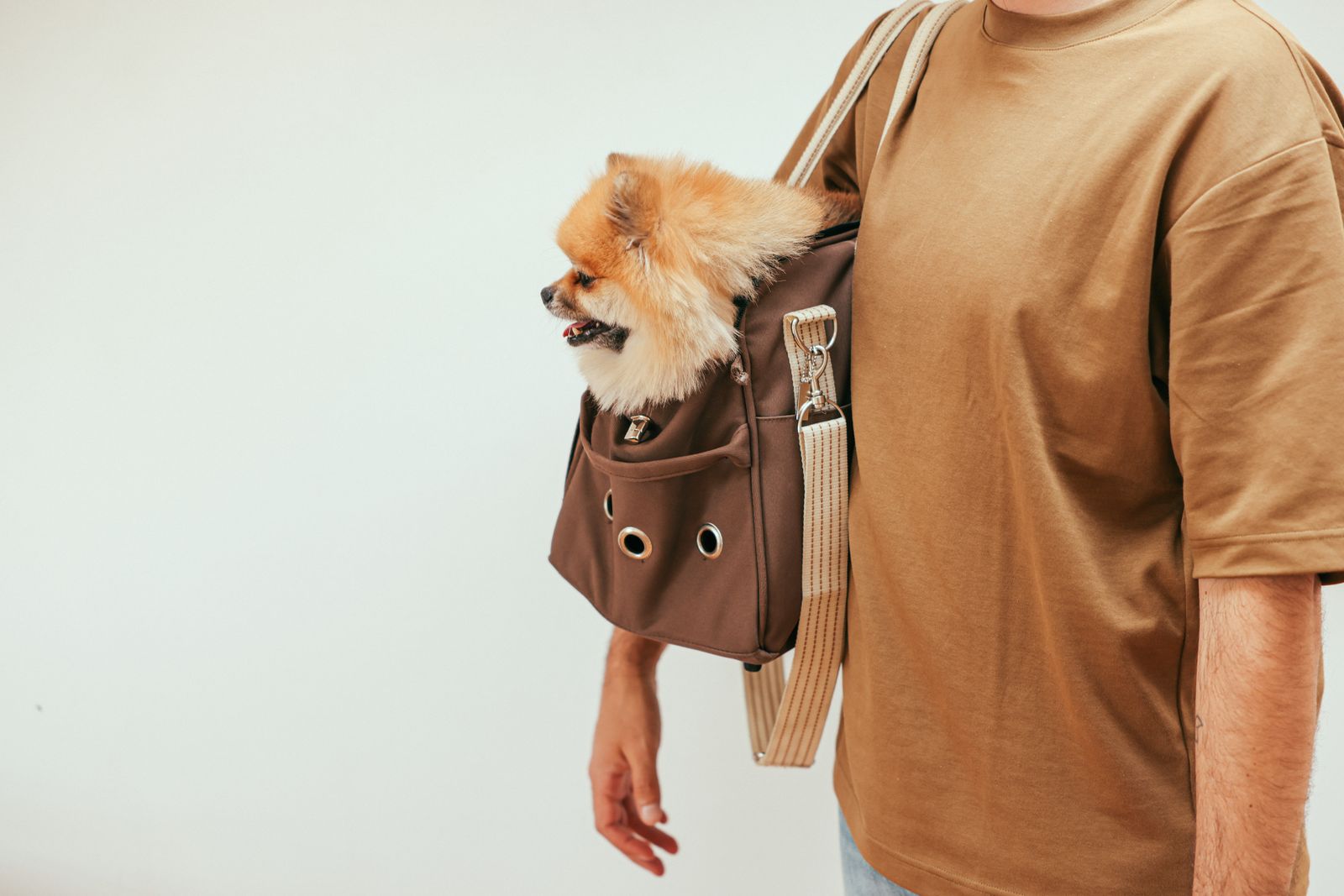
The PetAmi Dog Sling Carrier is the sling we’re comparing here. Per Target’s current product listing, the medium size measures 18 x 5.5 x 11 inches and is rated for pets between 5 and 10 pounds, and it’s priced at roughly $26.99, down from a $45.99 list price at the time of writing. It has a zip-front pouch, a breathable panel, and an adjustable crossbody strap, and PetAmi’s own product description refers to it as an “airline approved” front carrier — a claim we’d treat carefully, which we get into in the airline section below.
- Pros: Lowest price of the three by a wide margin; easiest to hand-wash because of its small size; genuinely hands-free for a dog under about 10 pounds.
- Cons: No rigid structure, so a squirming dog can end up dangling or sitting unevenly; all the weight sits on one shoulder, which gets tiring over more than 10–15 minutes; not a good fit once a dog is close to the 10-pound ceiling.
Best for: dogs under 10 pounds, short carries, and owners who want the cheapest possible option for occasional use rather than daily commuting.
Which Carrier Is Best for All-Day Wear or Longer Outings?
Once you’re out for more than a few minutes at a time — a full day of errands, a farmers market plus a walk plus a coffee shop — a backpack carrier distributes weight across both shoulders and usually your hips, the same way a hiking pack does. That structural difference is why backpacks tend to outlast slings in daily use, according to the pattern we saw across owner reviews.

The K9 Sport Sack Trainer is the backpack we’re comparing. Per PetSmart’s current product listing, it measures roughly 10 x 9 x 17 inches, is rated for pets up to 30 pounds, and runs about $94.95. That’s the highest weight rating and the highest price of the three carriers here, and it’s built with a semi-rigid base and mesh ventilation panels rather than the fully soft, floppy construction of a sling.
- Pros: Highest weight capacity of the three; both-shoulder support is far more comfortable for long outings; semi-rigid base keeps the dog level instead of dangling.
- Cons: Most expensive of the three; bulkier to store when empty; its roughly 17-inch height makes it a poor fit for stowing fully under most airline seats.
Best for: owners who carry their dog for more than a few minutes at a stretch — commuting, hiking, or a full day of errands — and want a higher weight ceiling than a sling can offer.
What Makes a Dog Travel Carrier Airline-Compliant?
Airline compliance comes down to two things: the carrier’s outer dimensions fitting under the seat in front of you, and the pet staying fully enclosed inside it for the whole flight rather than being worn or held. Chewy’s airline pet-policy guide lists in-cabin soft-sided carrier maximums of roughly 18 x 11 x 11 inches for United, Delta, and American, and about 18.5 x 13.5 x 9.5 inches for Southwest — and those numbers are exactly why size, not just a manufacturer’s “airline approved” label, is what actually decides whether a carrier gets through the gate.
The Sherpa Ultimate On Wheels is the rolling carrier we’re comparing, and it’s the one built with air travel most in mind. Per Petco’s current product listing, it measures about 20 x 12.25 x 10.5 inches, is rated for pets up to 22 pounds, and is priced around $72.46, down from a $99.99 list price. Sherpa markets it under its own “Guaranteed On Board” program and describes it as approved on most major airlines — but at 20 inches long, it’s longer than the roughly 18-inch soft-carrier maximum that Chewy’s guide cites for United, Delta, and American. Always check your exact model against the carrying airline’s current pet policy before you fly; requirements and gate-agent enforcement vary by route and can change.
- Pros: Largest usable interior of the three, so heavier small dogs (up to 22 pounds) have room to turn around; wheels remove the weight from your arms and shoulders on long terminal walks; doubles as rolling luggage for a short trip.
- Cons: Highest weight rating still falls short of the backpack’s 30-pound limit; its 20-inch length exceeds the soft-carrier maximum several major airlines cite, so under-seat compliance needs airline-specific confirmation; not hands-free — you’re either rolling it or carrying it by the top handle.
Best for: flying with a dog in the 15–22 pound range, or anyone who wants to roll rather than carry through a long airport concourse — provided you’ve confirmed the exact size rules with your airline first.
One more note on the sling and air travel specifically: most airlines require the pet to remain fully enclosed inside the approved carrier under the seat for taxi, takeoff, and landing, not worn against your body. Even though the PetAmi sling’s 18 x 5.5 x 11-inch dimensions fit comfortably within the size limits above, a worn sling may not satisfy that “fully enclosed under the seat” requirement during the flight itself — it’s better suited to the walk through the terminal than to the flight, so confirm with your specific airline before assuming it will work gate-to-gate.
Dog Travel Carrier Comparison by the Numbers
Manufacturers advertise weight limits and dimensions separately, so we ran our own numbers by multiplying each carrier’s listed length, width, and height into a total interior volume, then dividing both price and volume by the rated weight limit. That gives two original figures no listing publishes on its own: how much you’re paying per pound of rated capacity, and how much physical room the dog gets per pound it’s allowed to weigh.
| Carrier | Dimensions (L×W×H, in) | Interior Volume (cu in) | Weight Limit | Price | Price per lb of Capacity | Cu In per lb of Capacity |
|---|---|---|---|---|---|---|
| PetAmi Dog Sling Carrier | 18 × 5.5 × 11 | 1,089 | 10 lb | $26.99 | $2.70 | 108.9 |
| K9 Sport Sack Trainer | 10 × 9 × 17 | 1,530 | 30 lb | $94.95 | $3.17 | 51.0 |
| Sherpa Ultimate On Wheels | 20 × 12.25 × 10.5 | 2,572.5 | 22 lb | $72.46 | $3.29 | 116.9 |
Two things stand out. The PetAmi sling is the cheapest per pound of rated capacity by a clear margin, which tracks with it being the smallest and simplest build of the three. The K9 Sport Sack Trainer is the most size-efficient — it packs its 30-pound rating into the smallest volume per pound (51 cubic inches), meaning it’s built snug and structured rather than roomy. The Sherpa Ultimate On Wheels gives the dog the most physical space per pound it’s rated to carry (116.9 cubic inches), which lines up with owner feedback that it feels the least cramped of the three, but that extra room is also why it’s the priciest per pound of capacity.
Feature Differences That Actually Matter
Not every spec sheet difference changes how a dog actually rides. Here’s where the three styles genuinely diverge, and where the gap is mostly cosmetic.
Ventilation. The sling has the least airflow because it sits directly against your body, which can trap heat on warm days. The backpack and rolling carrier both use mesh side and top panels that let air move around the dog even while it’s zipped shut — a genuine, not cosmetic, difference for hot-weather use.
Hands-free design. The sling and backpack are both worn and keep your hands free; the rolling carrier does not, since you’re either pulling it by a handle or carrying it. If hands-free is your main requirement, that rules the rolling carrier out regardless of its other strengths.
Structural support for the dog. This is the decisive difference between the sling and the other two. A backpack’s semi-rigid base and a rolling carrier’s boxier shell both keep a dog level and supported; a soft sling can let a dog sag or sit off-balance if it isn’t nested correctly, and doing that for long stretches is a real dealbreaker for anything beyond quick carries.
Ease of cleaning. Smaller wins here: the sling is fastest to hand-wash simply because there’s less fabric, while the backpack and rolling carrier both rely on removable liners that take longer to fully dry.
Must-have vs. nice-to-have. A secure zip closure, a leash-clip tether inside the carrier, and adequate ventilation are must-haves on any of the three styles — skip a carrier that’s missing any of them. Extras like mesh side pockets, a chin rest, or color options are nice-to-have and shouldn’t move the decision on their own.
Frequently Asked Questions About Dog Travel Carriers
What’s the best dog travel carrier for small dogs right now?
For most owners, a structured backpack carrier like the K9 Sport Sack Trainer is the best all-around pick because it’s hands-free, supports the dog’s body better than a sling, and carries a higher rated weight. If you only need something for quick errands, the PetAmi Dog Sling Carrier costs far less. If you’re flying and your dog is closer to 20 pounds, the Sherpa Ultimate On Wheels gives you the most room.
Is a sling carrier bad for a dog’s hips or spine?
A sling is fine for short carries when a small dog is nested securely against your body, but letting a dog dangle or sit unevenly in a loose sling for long stretches can strain its hips and spine. Reserve slings for brief trips and switch to a backpack or rolling carrier for anything longer than a quick errand.
Can I bring a rolling dog carrier on a plane?
Many rolling carriers, including the Sherpa Ultimate On Wheels, are marketed as airline-friendly, but this model’s 20-inch length is longer than the roughly 18-inch soft-carrier maximum that United, Delta, and American cite in Chewy’s airline pet-policy guide. Confirm your exact model and route with the airline before you book, since policies and gate-agent enforcement vary.
What’s the difference between a dog travel carrier and a dog crate?
A dog crate is built for stationary use at home or secured in a car, while a dog travel carrier — sling, backpack, or rolling style — is designed to be worn or wheeled through airports, sidewalks, and stores. See our comparison of wire, plastic, and soft-sided dog crates if you need a stationary crate instead.
How much weight can these carriers actually hold?
Based on each manufacturer’s current listings, the PetAmi sling holds up to 10 pounds, the K9 Sport Sack Trainer is rated up to 30 pounds, and the Sherpa Ultimate On Wheels is rated up to 22 pounds. Always weigh your dog rather than guessing, since manufacturer weight limits assume the dog also fits the interior dimensions comfortably.
How do I clean a soft-sided dog carrier?
Most soft-sided carriers, including all three compared here, have removable or wipeable liners that can be hand-washed or spot-cleaned; check the specific product listing for machine-wash guidance before tossing it in a washer. Cleaning ease is one reason slings — the smallest of the three — tend to be the fastest to fully wash and dry.
The Bottom Line
None of these three styles is a false-balance tie. For everyday, all-purpose use, the backpack carrier is the clear standout because it’s hands-free, structurally supportive, and rated for the most weight. The sling only wins on price and quick, occasional carries. The rolling carrier only wins once you specifically need maximum interior room or wheels instead of weight on your body — and even then, its airline compliance needs a direct check with your carrier before you fly.
If your dog also needs a stationary spot at home or in the car, see our comparison of wire, plastic, and soft-sided dog crates — a different product built for a different job than the portable carriers above. For the walk itself, our harness vs. collar vs. head halter comparison covers the gear you’ll still want even when your dog isn’t riding in a carrier, and if you want to know where your dog is at all times while traveling, our dog GPS tracker comparison is a natural next read. You can find more comparisons like this one in our Dogs category.
