
Some links on our site may earn us a commission at no extra cost to you. Learn more.
The best beach umbrella for most people is a vented, anchored pole model like the Tommy Bahama 8-Foot Beach Umbrella — it delivers UPF 50+ shade and lets gusts pass through the canopy instead of catching them. If sun-angle control matters more than price, a tilting beach umbrella like the OGETFUUR 8-Foot Tilt earns its higher cost. And if setup speed beats everything else, a pop-up cabana such as the Alvantor Coolhut Plus goes from bag to shade in under 30 seconds.
Beach Umbrella Buying Guide: Vented vs. Tilting vs. Pop-Up Cabana at a Glance
Every style trades something for something else. A vented pole umbrella is the most wind-stable per dollar. A tilting umbrella adds mechanical sun-tracking at a real cost premium. A pop-up cabana wins on setup time and packed size but gives up wind ceiling. Here’s the short version before we get into the specifics.
- Best overall: Tommy Bahama 8-Foot Beach Umbrella with Wind Vent — vent-plus-anchor design, UPF 50+, and the lowest cost per square foot of shade of the three.
- Best budget: Alvantor Coolhut Plus Pop-Up Beach Cabana — sale price under $50, no pole to plant, shade in under 30 seconds.
- Best upgrade: OGETFUUR 8-Foot Tilt Beach Umbrella — push-button tilt joint, a published Level 7 wind-resistance rating, and a heavier-duty fillable anchor.
| Umbrella | Style | Price | UPF | Canopy / Footprint | Wind Feature |
|---|---|---|---|---|---|
| Tommy Bahama 8-Foot Beach Umbrella | Vented pole | ~$61.90 | UPF 50+ | 8 ft diameter (~50.3 sq ft) | Wind vent + screw sand anchor |
| OGETFUUR 8-Foot Tilt Beach Umbrella | Tilting pole | ~$146.99 | UPF 50+ | 8 ft diameter (~50.3 sq ft) | Level 7-rated + 44 lb sand-fillable pole |
| Alvantor Coolhut Plus | Pop-up cabana | ~$45.99 (sale) / $99.99 | UPF 50+ | 79″ x 47″ footprint (~25.8 sq ft) | Sand pockets, sandbags, stakes; rated to 25 mph |
How We Compared These Beach Umbrellas
We did not physically test these three products ourselves. Instead, we cross-checked manufacturer and retailer specifications, read verified owner feedback on retail listings, and looked for recurring long-term reliability complaints — snapped ribs, torn vents, anchors that strip out of loose sand — rather than relying on first-impression star ratings alone.
We also checked that pattern against expert consensus from outlets that run ongoing beach-gear coverage, like CNN Underscored and The Inertia, and against wind-testing writeups that specifically evaluate anchor and vent combinations. Where a brand didn’t publish an independent wind-resistance number, we said so instead of guessing. For more on how we select and vet products across this site, see our editorial standards.
Tommy Bahama 8-Foot Beach Umbrella: The Vented Pick
The Tommy Bahama 8-Foot Beach Umbrella is a straight-pole, vented design — the classic beach umbrella shape, but with a mesh vent panel near the canopy top and a screw-style sand anchor built into the base. Walmart’s product listing prices it at $61.90 and confirms UPF 50+ protection along with the wind vent and “patented sand anchor” for stability in breezy conditions.
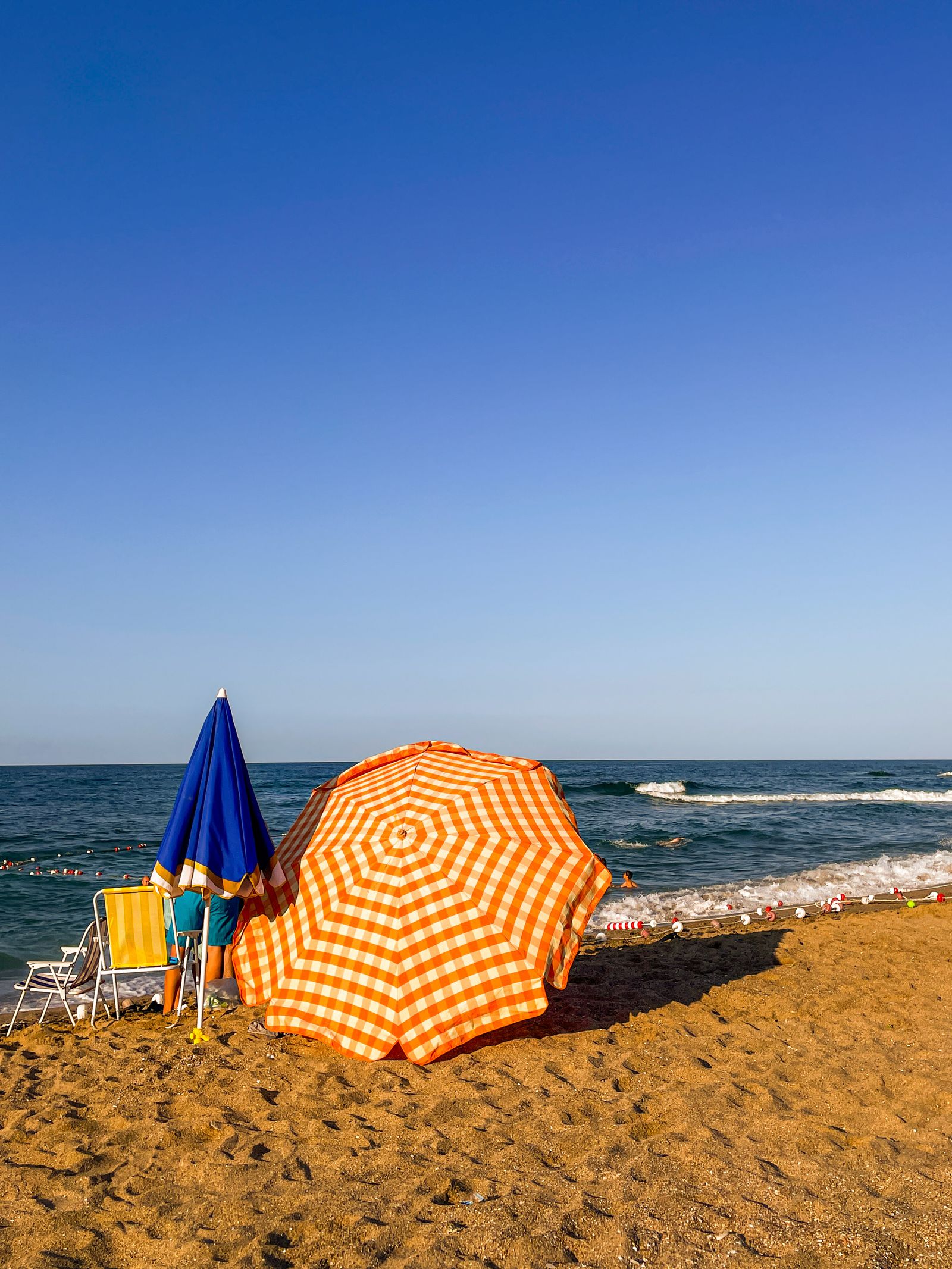
The 8-foot canopy works out to roughly 50.3 square feet of shade — plenty for two beach chairs and a cooler. Setup means screwing the fold-down anchor arms into wet, packed sand, which takes more effort than a quick push-in pole but holds significantly better once it’s set.
Who the vented pick is best for
This is the right call for anyone who wants dependable wind performance without paying for a tilt mechanism they may rarely use. It’s also the best value of the three on a pure shade-per-dollar basis.
- Pros: Vent-plus-anchor combination that wind-testing coverage consistently favors; UPF 50+; lowest cost per square foot of shade of the three; sold through multiple major retailers.
- Cons: No push-button tilt, so angle adjustment is more manual; the screw anchor takes real effort in dry, loose sand; stock has been inconsistent at some individual retailers.
OGETFUUR 8-Foot Tilt Beach Umbrella: The Tilting Pick
The OGETFUUR 8-Foot is built around a push-button tilt joint that lets you swing the canopy through roughly 30 degrees of angle adjustment as the sun moves, without repositioning the whole umbrella. Home Depot’s product listing prices it at $146.99 and states UPF 50+ protection that blocks over 98% of UV rays.
Home Depot also lists this model as tested to “Level 7” wind resistance. Level 7 on the Beaufort wind scale — the scale the National Weather Service publishes for describing wind conditions — corresponds to roughly 32-38 mph sustained wind, useful context for what that retailer claim actually means in practice. Stability comes from a telescoping pole that can be filled with up to 44 pounds of sand, plus a secondary sandbag pouch for extra hold.
Who the tilting pick is best for
This umbrella suits anyone parked in one spot for a full day as the sun tracks overhead — think long beach-camping days, tailgates, or backyard patios where repositioning isn’t convenient. The tilt hinge is a genuine mechanical differentiator, not just a marketing label.
- Pros: Push-button tilt tracks a moving sun; Level 7 wind-resistance rating backed by a 44-lb sand-fillable pole; UPF 50+; sturdier build overall.
- Cons: More than double the price of the vented pick per square foot; bulkier and heavier pole assembly to carry; the tilt hinge is one more mechanical part that can wear with years of sandy use.
Alvantor Coolhut Plus: The Pop-Up Cabana Pick
The Alvantor Coolhut Plus skips the pole entirely. It’s a hub-frame pop-up shelter that unfolds into a walled, UPF 50+ cabana in under 30 seconds, according to Alvantor’s own product listing, which currently prices it at $45.99 on sale (regular price $99.99) and lists a 79-inch by 47-inch by 53-inch footprint.
A retail listing for the Coolhut Plus on Walmart notes it as windproof up to 25 mph when its three sand pockets, four sandbags, and four ground stakes are all used, and puts the packed weight at 4.8 pounds in a compact carry case — the lightest and most packable of the three by a wide margin.
Who the pop-up cabana pick is best for
This is the pick for families who want a walled, semi-private space to change, nurse, or nap a toddler out of direct sun, and for anyone who values a 30-second setup over maximum wind tolerance. It’s a weaker choice for exposed, consistently windy coastlines.
- Pros: Sets up in under 30 seconds with no pole to plant; UPF 50+; lightest and most packable of the three at 4.8 lbs; lowest sale price.
- Cons: Lower published wind ceiling (25 mph) than either anchored pole umbrella; smaller shaded footprint per dollar at full price; fixed frame means no tilt or angle adjustment.
Original Analysis: What Are You Actually Paying Per Square Foot of Shade?
Sticker price alone doesn’t tell you how much shade you’re buying. A circular umbrella’s covered area follows a basic geometry formula: area = π × radius². For an 8-foot-diameter canopy, the radius is 4 feet, so the shaded area works out to π × 4² ≈ 50.3 square feet. The Coolhut Plus isn’t circular — its 79-inch by 47-inch footprint converts to 6.58 feet by 3.92 feet, or roughly 25.8 square feet of covered ground.
Dividing each umbrella’s price by its shaded area gives a genuine apples-to-apples cost comparison, shown below using the prices verified above.
| Umbrella | Price | Shaded Area | Cost per Sq Ft of Shade |
|---|---|---|---|
| Tommy Bahama 8-Foot | $61.90 | 50.3 sq ft | $1.23 |
| OGETFUUR 8-Foot Tilt | $146.99 | 50.3 sq ft | $2.92 |
| Alvantor Coolhut Plus (sale) | $45.99 | 25.8 sq ft | $1.78 |
| Alvantor Coolhut Plus (regular) | $99.99 | 25.8 sq ft | $3.88 |
By this math, the vented Tommy Bahama delivers the cheapest shade per square foot of the three, and the OGETFUUR’s tilt mechanism carries a real premium — more than double the cost per square foot for the same 8-foot canopy size. The cabana looks cheap on sale but reverts to the most expensive option per square foot at its regular price, since its shelter is smaller and boxier than a circular canopy of the same pole height.
Wind Safety: Why “Vented” Isn’t Just a Marketing Word
An unanchored or non-vented umbrella catching a gust isn’t a minor inconvenience — it’s a real, documented safety hazard. That’s serious enough that the umbrella industry now has a dedicated ASTM F3681-24 beach umbrella safety standard built specifically around anchoring and stability requirements. Treat wind rating as a safety spec, not a nice-to-have.
| Umbrella | Anchor Type | Published Wind Data |
|---|---|---|
| Tommy Bahama 8-Foot | Vented canopy + screw-style sand anchor | No specific mph published; this vent-plus-auger combination is the setup that wind-testing coverage from americasstateparks.org identifies as the most reliable in gusty conditions |
| OGETFUUR 8-Foot Tilt | Sand-fillable pole (up to 44 lbs) + sandbag | “Level 7” per Home Depot’s listing, corresponding to roughly 32-38 mph on the Beaufort scale published by the National Weather Service |
| Alvantor Coolhut Plus | Sand pockets, sandbags, and ground stakes | Rated windproof up to 25 mph per its Walmart product listing |
The pattern here matters more than any single number: a vented canopy paired with a deep sand anchor consistently outperforms a solid, non-vented canopy of the same size in wind, because the vent bleeds off pressure instead of letting the whole canopy act as a sail. A boxier cabana shape like the Coolhut Plus presents more flat surface area to a crosswind, which is a real factor in why its published wind ceiling sits lower than either pole umbrella’s.
Must-Have vs. Nice-to-Have Features
Not every spec on a beach umbrella’s box matters equally. Two things are genuinely non-negotiable; everything else is a preference call.
- Must-have: UPF 50+ fabric — all three products here carry it, and it’s the highest UV-blocking rating fabric makers publish.
- Must-have: An anchor system actually matched to your beach’s typical wind — a screw auger or a fully-loaded sandbag system, not just a pole pushed into dry surface sand.
- Nice-to-have: Tilt adjustability — useful for all-day sessions, skippable if you move your umbrella with the sun anyway.
- Nice-to-have: Cabana-style walls and floor — great for families with small kids, unnecessary if you just want shade over a chair.
Frequently Asked Questions
What’s the real difference between a vented and a non-vented beach umbrella?
A vented umbrella has a mesh or flap opening near the top of the canopy that lets wind pass through the fabric instead of pushing against it like a sail. Non-vented canopies look fuller and block a bit more direct sun, but they catch more wind load, which is why manufacturers pair them with heavier ballast or bigger anchor systems instead of a vent.
Are tilting beach umbrellas less stable than fixed vented poles?
Not inherently — stability comes from the anchor, not the tilt joint. A tilting model like the OGETFUUR 8-Foot still needs its pole filled with sand or staked down; the tilt hinge itself is rated as part of the pole assembly’s wind resistance, not a separate weak point, per Home Depot’s listed Level 7 wind-resistance rating for that model.
How much wind can a pop-up beach cabana actually handle?
Retail listings for the Alvantor Coolhut Plus rate it windproof up to 25 mph when its sand pockets, sandbags, and stakes are all used, according to its Walmart product listing — lower than the wind ratings published for anchored pole umbrellas, since a boxier cabana shape presents more surface area to gusts.
What UPF rating should I look for in a beach umbrella?
Look for UPF 50+, which blocks about 98% of UV radiation and is the highest standard rating fabric makers publish; all three umbrellas in this comparison — the Tommy Bahama, the OGETFUUR, and the Alvantor Coolhut Plus — carry a UPF 50+ rating.
How do I anchor a beach umbrella safely in windy conditions?
Screw or auger-style anchors that go 12-18 inches into wet, packed sand hold better than umbrellas simply pushed into dry surface sand, and pairing an anchor with a vented canopy is the combination that testing from americasstateparks.org identified as most reliable in gusty conditions.
Is a pop-up cabana better than a traditional umbrella for families with young kids?
For families, a cabana’s walled, floored design offers more shade coverage per person and doubles as a changing or napping space, but it sacrifices some of the wind resistance and packed-size compactness of a pole umbrella, so it suits calmer, family-beach days better than exposed, gusty coastlines.
How much does a good beach umbrella cost?
Expect to pay roughly $45 to $65 for a solid vented or pop-up option and closer to $130-$150 for a heavier-duty tilting umbrella with a laboratory wind-resistance rating, based on current listings for the three products compared here.
The Bottom Line
If you only buy one beach umbrella and want it to survive an actual windy afternoon, the vented Tommy Bahama 8-Foot is the safest default — it’s the cheapest shade per square foot of the three and pairs the exact vent-plus-anchor combination that wind-testing guides recommend. Upgrade to the OGETFUUR if you’re committed to full-day sessions and want push-button sun tracking. Go with the Alvantor Coolhut Plus if setup speed and packability outrank maximum wind tolerance for your typical beach day.
Whichever style you land on, pair it with the right beach chair, a beach wagon to haul it all, and a solid cooler to round out the setup. Browse more comparisons like this one in our Beach & Backyard category.
Prices are approximate, current as of publication, and change frequently — confirm the latest price with the retailer before buying.
