
Some links on our site may earn us a commission at no extra cost to you. Learn more.
Published July 27, 2026. Updated August 17, 2026.
These three bottles don’t compete with each other — they solve three different water problems, and using the wrong one can leave you exposed. LifeStraw’s Go Series is built for bacteria and protozoa in backcountry water; GRAYL’s GeoPress is the only one of the three rated to also remove viruses, which matters for international travel; and Brita’s bottle only ever claims to fix the taste of water that’s already been treated. Below, we match each bottle to the water source it’s actually built for, then show what a year of replacement filters costs for each.
At a Glance: Our Picks
Short on time? Here’s the verdict before the details.
- Best for backcountry and untreated water: LifeStraw Go Series (1L) — Blocks bacteria and protozoa for years on one membrane, at a fraction of GRAYL’s price.
- Best for sketchy tap water while traveling: GRAYL GeoPress (24oz) — The only one of the three rated to remove viruses, worth it for international travel.
- Best for everyday chlorine-taste filtering: Brita Premium Filtering Water Bottle (26oz) — Cheapest upfront and per liter, but only for treated tap water, not backcountry sources.
How Do LifeStraw, Brita, and Grayl Compare?
The three bottles solve different problems, so the numbers below matter more than star ratings. Here’s what each one removes, how long its filter lasts, and what it costs today.
| Bottle | Price | Removes | Filter/Cartridge Life | Certifications |
|---|---|---|---|---|
| LifeStraw Go Series (1L) | $39.96 | Bacteria, protozoa, microplastics, chlorine/taste | Membrane: ~1,000 gal (4,000L)/~5 yrs; Carbon: ~26 gal (100L)/~2 mo | Meets EPA & NSF P231 (bacteria/parasites), NSF 42 (chlorine) |
| GRAYL GeoPress (24oz) | $99.95 | Viruses, bacteria, protozoa, chemicals, heavy metals, taste | ~65 gal (246L) / 350 presses / ~3 yrs | NSF/ANSI 42 & 53; EPA microbiological purifier standard |
| Brita Premium Filtering Water Bottle (26oz) | $23.99 | Chlorine/taste/odor, copper, cadmium, mercury | ~40 gal (151L)/~2 mo | Not a purifier — taste/chemical filter only |
Is a Filtered Water Bottle the Same as a Purifier?
No — and this distinction matters more than price or brand. A taste/chlorine filter, like Brita’s, is designed for water that’s already been treated by a municipal system; it makes tap water taste better but does nothing to bacteria, protozoa, or viruses (per Brita’s own product listing, which lists only chlorine, copper, cadmium, and mercury reduction).
A purifier, by the EPA’s guide-standard definition, has to remove bacteria, protozoa, and viruses. Of the three bottles here, only GRAYL’s GeoPress meets that full bar, tested to NSF/ANSI 42 and 53 protocols and the EPA’s guide standard for microbiological water purifiers (per Grayl’s published cartridge specs). LifeStraw’s Go Series sits in between: its membrane microfilter is tested to EPA and NSF P231 standards for bacteria and protozoa removal, but it is not rated for viruses.
In practice: don’t fill a Brita bottle from a stream, and don’t assume a bacteria-and-protozoa filter like LifeStraw’s is enough where waterborne viruses are a realistic risk, as in many international destinations with unreliable water treatment.
Backcountry and Untreated Water: LifeStraw’s Membrane Is the Cheap, Long-Lived Answer
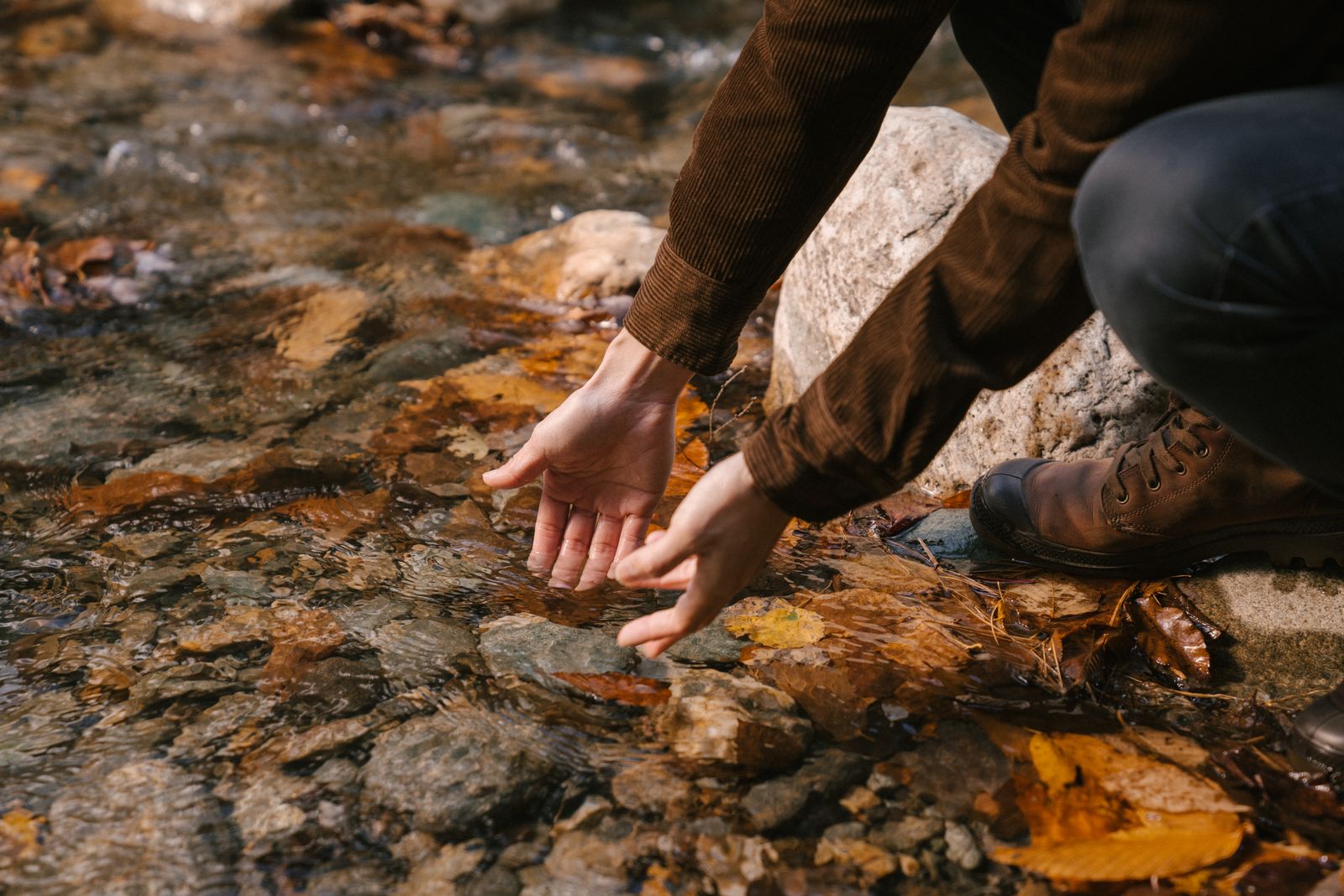
For a stream on a U.S. trail, a lake at a car-camping site, or any water source where bacteria and protozoa — not viruses — are the realistic risk, the LifeStraw Go is the pick, because its membrane microfilter blocks both for years on a single cartridge, at less than half GRAYL’s price. It’s the one we’d put in a daypack, a car-camping kit, or a carry-on for most domestic trips.
Its two-stage system does the real work: a hollow-fiber membrane microfilter removes 99.999999% of bacteria (including E. coli and Salmonella) and 99.999% of protozoan parasites (Giardia and Cryptosporidium), plus 99.999% of microplastics, rated for roughly 1,000 gallons (4,000 liters), or about five years of regular use (per LifeStraw’s product specifications). A second carbon capsule knocks down chlorine taste, odor, and some organic chemicals, rated for about 26 gallons (100 liters), or roughly two months of regular use.
The Go Series meets EPA and NSF P231 standards for bacteria and parasite reduction, and NSF 42 for chlorine reduction (per LifeStraw’s specifications) — but it is not tested or rated to remove viruses, and it does not remove heavy metals or PFAS. That gap is exactly why it’s the backcountry pick, not the international-travel pick.
Pros and Cons
- Pro: Membrane lasts years, not months, so ongoing cost stays low.
- Pro: Lightweight, straw-style sipping, easy to drink on the move.
- Con: No virus protection — a real gap for some international trips.
- Con: Carbon capsule still needs swapping roughly every two months of regular use.
Best for: Domestic hiking, camping, and everyday travel where bacteria and protozoa — not viruses — are the realistic risk, like a stream on a US trail rather than tap water abroad.
Sketchy Tap Water While Traveling: Only GRAYL Covers Viruses
For international travel to a country with unreliable water treatment, the GRAYL GeoPress is the pick, because it’s the only bottle in this comparison built to purify rather than just filter — it’s rated to remove viruses along with bacteria and protozoa. That extra protection is also why it costs the most, both upfront and per liter.
Instead of sipping through a straw, you press the inner cup down through the outer bottle, forcing water through an electroadsorption and activated-carbon cartridge in about 8 seconds per 24 ounces. Grayl’s published testing shows the cartridge removes 99.99% of viruses, 99.9999% of bacteria, and 99.9% of protozoan cysts — including specific pathogens like rotavirus, hepatitis A, norovirus, Giardia, Cryptosporidium, E. coli, cholera, and Salmonella — while its activated carbon also adsorbs chemicals, pesticides, heavy metals, and odors.
The cartridge is independently tested to NSF/ANSI protocols 42 and 53, plus the EPA’s guide standard for microbiological water purifiers (per Grayl’s published specs), and is rated for about 350 presses — roughly 65 gallons (246 liters) — or three years of use, whichever comes first.
Pros and Cons
- Pro: Only bottle here rated to remove viruses, not just bacteria and protozoa.
- Pro: Fast — a full press takes about 8 seconds.
- Con: Heaviest and bulkiest of the three, and requires physical effort to press.
- Con: Highest cost per liter of the three by a wide margin.
Best for: International travel to regions with unreliable water treatment, or backcountry water sources near people or livestock where viral contamination is plausible.
Everyday Chlorine Taste at Home or the Office: Brita Is Enough (and Cheaper)
For water that’s already municipally treated and just tastes like chlorine, Brita’s bottle is the pick, because paying for pathogen removal you don’t need is wasted money — it’s built to make already-treated tap water taste better, not to make questionable water safe to drink.
Its coconut-based activated carbon and ion-exchange filter reduces chlorine taste and odor, plus copper, cadmium, and mercury, while leaving natural minerals and electrolytes in place (per Brita’s product listing). The filter is rated for about 40 gallons (151 liters), or roughly two months of regular use, and the bottle itself runs $23.99 with one filter included.
What it doesn’t do is just as important: Brita’s listing makes no claim of bacteria, protozoa, or virus removal, and it carries no purifier certification. Use it on municipal tap water you already trust, not on a trailhead spigot of unknown origin or water abroad.
Pros and Cons
- Pro: Cheapest bottle and cheapest replacement filters of the three.
- Pro: Noticeably improves the taste of chlorinated tap water.
- Con: Zero pathogen protection — not safe as a standalone backcountry or travel-abroad water source.
- Con: Filter life is the shortest of the three at about two months.
Best for: Commuters, students, and office or gym use where the water is already municipally treated and the goal is better taste, not backcountry safety.
What a Liter — and a Year — of Filtered Water Actually Costs
Upfront price doesn’t tell you what a bottle costs to use. We divided each bottle’s purchase price by its filter’s rated capacity in liters — the same unit-price math you’d use to compare bulk groceries — to see which one is cheapest per liter filtered.
LifeStraw Go (1L): $39.96 ÷ 4,000 liters (the membrane’s rated life, per LifeStraw’s specifications) = $0.01 per liter for the bacteria/protozoa-blocking stage.
GRAYL GeoPress (24oz): $99.95 ÷ 246 liters (the cartridge’s rated ~65-gallon life, per Grayl’s specs) = $0.41 per liter for full virus-inclusive purification.
Brita Premium Filtering Water Bottle (26oz): $23.99 ÷ 151 liters (the filter’s rated ~40-gallon life, per Brita’s specs) = $0.16 per liter — but that liter is only taste-and-chlorine filtered, not pathogen-safe.
| Bottle | Bundled Filter Cost/Liter | Replacement Cost | Ongoing Cost/Liter |
|---|---|---|---|
| LifeStraw Go (1L) | $0.01/L (membrane) | Carbon 2-pack: $9.95 (~200L taste stage) | ~$0.05/L (carbon/taste stage; membrane rarely needs replacing) |
| GRAYL GeoPress | $0.41/L | Replacement cartridge: $29.95 (246L) | ~$0.12/L |
| Brita Premium Bottle | $0.16/L | 3-pack filters: $14.99 (~453L total) | ~$0.03/L |
Per-liter cost is useful, but most people don’t think in liters — they think in a year of use. Assuming a consistent 300 liters of filtered water a year (roughly a liter a day, a reasonable baseline for a daily-carry bottle across all three scenarios), we applied each bottle’s ongoing cost-per-liter figure above to get an annualized replacement-filter cost:
| Bottle | Ongoing cost/liter | × 300 L/year | Annual replacement-filter cost |
|---|---|---|---|
| LifeStraw Go (carbon/taste stage) | $0.05/L | × 300 | ~$15/year |
| GRAYL GeoPress | $0.12/L | × 300 | ~$36/year |
| Brita Premium Bottle | $0.03/L | × 300 | ~$9/year |
The upshot: LifeStraw’s pathogen-blocking membrane is so long-lived it barely shows up in the annual number — what you’re really paying for every year is its cheap carbon taste stage. GRAYL is the most expensive to keep running in every scenario, which is the price of virus removal. Brita is cheapest per year, but it’s the only one of the three not actually filtering anything dangerous out.
How We Compared
We built this comparison from each brand’s published product specifications and certification claims, cross-checked against retailer listings, verified owner feedback on long-term filter performance, and general outdoor-gear consensus on reliability patterns for each model. We did not hands-on test these bottles ourselves.
Where a certification or contaminant-removal claim is stated, we sourced it directly from the manufacturer’s own specifications and named it in-sentence, rather than inferring or estimating. Our full approach to research, sourcing, and disclosure is outlined in our editorial standards.
Prices are approximate, current as of publication, and change frequently — confirm the latest price with the retailer before buying.
For related gear, our camping archive covers the rest of a backcountry kit. If you’re building out a full pack, see how we compare hydration packs from CamelBak, Osprey, and Gregory, how insulated bottles from Hydro Flask, Yeti, and Stanley stack up for temperature retention instead of filtration, and our breakdown of aluminum vs. carbon trekking poles.
Frequently Asked Questions
What’s the difference between a water filter bottle and a water purifier bottle?
A filter bottle reduces things like chlorine taste, odor, and some chemicals, and some filters — like LifeStraw’s membrane — also block bacteria and protozoa. “Purifier” is a more specific standard that additionally requires removing viruses, which only GRAYL’s GeoPress in this comparison meets, per its NSF/ANSI 42 and 53 and EPA purifier-standard testing.
Can I use a Brita filtered bottle for hiking or backcountry water?
No. Brita’s filter is designed to improve the taste of already-treated municipal tap water and only targets chlorine, copper, cadmium, and mercury, per Brita’s product page. It does not remove bacteria, protozoa, or viruses, so it isn’t safe as your only water source on trail.
Does LifeStraw remove viruses?
No. LifeStraw’s Go Series membrane microfilter is tested to EPA and NSF P231 standards for bacteria and protozoa removal (99.999999% and 99.999% respectively, per LifeStraw’s specifications), but it is not rated to remove viruses — that gap matters most in regions with poor sanitation infrastructure.
Are these bottles safe for international travel?
Only GRAYL’s GeoPress in this lineup is tested to remove viruses in addition to bacteria and protozoa, per its NSF/ANSI 42 and 53 and EPA-standard testing, which is the relevant protection level for destinations where tap water isn’t reliably treated. LifeStraw’s Go Series and Brita’s bottle are not rated for virus removal.
Do any of these bottles remove PFAS or heavy metals?
Brita’s carbon/ion-exchange filter targets copper, cadmium, and mercury but doesn’t claim PFAS removal. LifeStraw states its membrane does not remove heavy metals or PFAS. GRAYL’s activated carbon is stated to adsorb heavy metals and chemicals, but none of the three brands publishes independent PFAS-specific certification in the materials we reviewed, so treat that as unconfirmed rather than assume protection.
