Some links on our site may earn us a commission at no extra cost to you. Learn more.
The hiking boots vs trail runners debate has a short honest answer: most day hikers on maintained trails are better served by trail runners, while boots still earn their weight on rough terrain, heavy-pack trips, and wet shoulder seasons. The deciding factors are load, terrain, and weather — not tradition. Below, we match six current shoes to five kinds of hiking, then run the math on what shaving ounces actually costs.
Quick picks
- Best overall: Salomon X Ultra 5 GTX — the low-cut hiking shoe that behaves like a boot where it counts, GearJunkie’s top-rated hiker at 9.2/10.
- Best budget: Merrell Moab 3 — the proven $140 workhorse, heavier but stable and breathable.
- Best trail runner for hiking: Hoka Speedgoat 7 — deep cushion and real traction at 1 lb 3.4 oz a pair.
- Best for thru-hiking miles: Altra Lone Peak 9 — zero-drop, famously roomy toebox, the long-distance crowd’s default.
What actually separates a boot from a trail runner?
Weight, stiffness, and weatherproofing — in that order. A traditional hiking shoe or boot uses stiffer midsoles and heavier, more armored uppers, which protect your feet under a loaded pack and shrug off rock strikes. A trail runner trades most of that armor for half the weight and instant comfort out of the box.
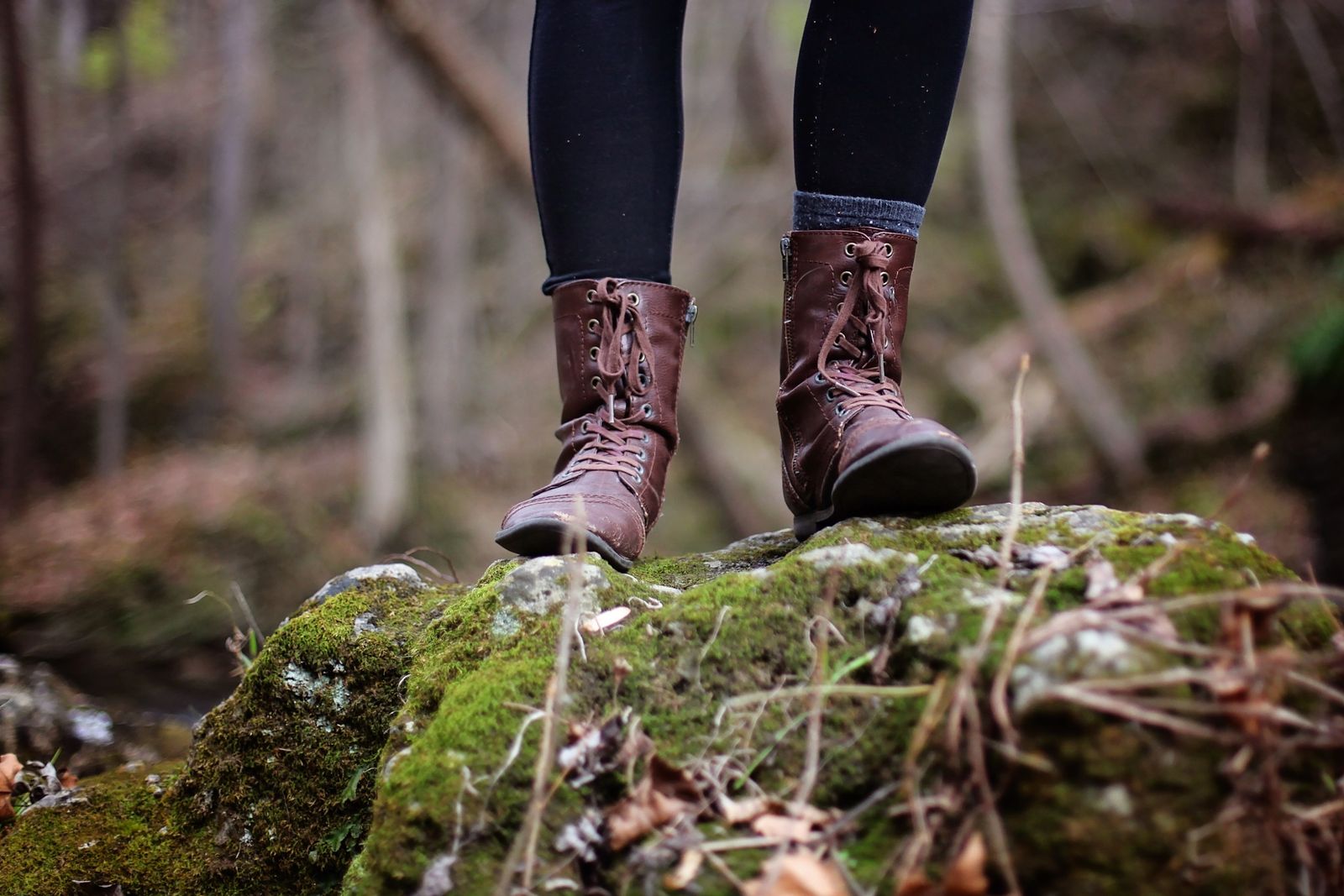
The old rule that everyone needs ankle-high boots has quietly died. What replaced it is a load-based rule: the more weight on your back and the rougher the ground, the more shoe you want under it.
Six current shoes, side by side
Prices, weights (per pair), and ratings below are as tested and listed in GearJunkie’s 2026 hiking footwear guide; all six are current-generation models sold today.
| Shoe | Type | Price | Weight (pair) | Waterproof | Best at |
|---|---|---|---|---|---|
| Salomon X Ultra 5 GTX | Hiking shoe | $175 | 1 lb 9.6 oz | Yes (Gore-Tex) | All-around day hiking |
| Merrell Moab 3 | Hiking shoe | $140 | 2 lb 1 oz | No (ventilated) | Value, stability |
| Hoka Speedgoat 7 | Trail runner | $165 | 1 lb 3.4 oz | No | Cushioned fast miles |
| Altra Lone Peak 9 | Trail runner | $145 | 1 lb 6.4 oz | No | Thru-hiking, wide feet |
| La Sportiva TX4 EVO | Approach shoe | $190 | 1 lb 12 oz | No | Rock and scrambling |
| Scarpa Rush 2 Pro GTX | Hiking shoe | $190 | 1 lb 8 oz | Yes (Gore-Tex) | Wet-weather hiking |
The price of a lighter step: our dollars-per-ounce math
Lighter footwear is the single upgrade hikers feel most, so we computed what each shoe charges for the ounces it saves. Using the $140, 33-ounce Merrell Moab 3 as the baseline, here is each shoe’s weight saving and what every saved ounce costs — a calculation you won’t find on any spec sheet.
| Shoe | Ounces saved vs. Moab 3 | Price premium | Cost per ounce saved |
|---|---|---|---|
| Hoka Speedgoat 7 | 13.6 oz | +$25 | $1.84 |
| Altra Lone Peak 9 | 10.6 oz | +$5 | $0.47 |
| Scarpa Rush 2 Pro GTX | 9.0 oz | +$50 | $5.56 |
| Salomon X Ultra 5 GTX | 7.4 oz | +$35 | $4.73 |
| La Sportiva TX4 EVO | 5.0 oz | +$50 | $10.00 |
Read that table and one shoe jumps out: the Altra Lone Peak 9 buys weight savings for pennies — under fifty cents per ounce. The Speedgoat 7 saves the most total weight at a fair rate. The waterproof Salomon and Scarpa charge several dollars per ounce, which is really the price of Gore-Tex, not lightness.
Which should you buy for how you actually hike?
Day hikes on maintained trails
Trail runners win. On groomed paths with a light daypack, boot-level protection is solving a problem you don’t have. The Speedgoat 7’s deep midsole flatters tired legs, and GearJunkie’s testers praised its traction as secure even on technical ground — its main caveats are a snugger fit than earlier versions and a warmer upper.
Rocky, rooty, or off-trail terrain
This is where more shoe earns its keep. The Salomon X Ultra 5 GTX is the standout here — GearJunkie’s 9.2/10 top pick, with a fit its testers called “secure, snug, and virtually customized” and no break-in needed. If your hikes involve actual hands-on rock, the La Sportiva TX4 EVO’s sticky rubber is the specialist tool.
Long-distance and thru-hiking
The long-trail community largely settled this debate years ago: trail runners, worn with quick-drying socks and replaced more often. The Lone Peak 9’s zero-drop platform and wide toebox let feet swell and splay over big-mile days. The trade is durability — expect to replace trail runners noticeably sooner than boots, which is part of the real cost.
Wet weather and shoulder seasons
Waterproof membranes divide hikers for good reason: they keep rain and dew out, but they dry slowly once soaked and run warm in summer. For cold, wet conditions the Scarpa Rush 2 Pro GTX and X Ultra 5 GTX are the picks. For hot climates, skip the membrane entirely — a ventilated Moab 3 or any trail runner here drains and dries faster.
Heavy packs and first-timers
Carrying 30-plus pounds, or just want maximum stability under an unsteady stride? The Moab 3 remains the value answer at $140 — GearJunkie rates it a solid 7.9/10, dinged mainly for weight and a short break-in. It’s the shoe we’d hand a new hiker who doesn’t yet know what they need.
Dealbreakers worth knowing
Every shoe here has one. The Speedgoat 7 fits smaller than previous versions — order carefully. The Lone Peak’s zero-drop geometry demands an adjustment period if you’ve never worn flat shoes; calves feel it first. The X Ultra 5’s quick-lace system can’t be field-repaired with a spare lace. And the Moab 3’s two-pound-plus heft is exactly what the ounce math above says it is: the price you stop paying when you go lighter.
How we compared
We compared current, in-stock models using specifications, prices, and tester ratings published in GearJunkie’s 2026 hiking footwear guide, cross-checked against manufacturer listings in July 2026, plus long-term owner feedback patterns on durability and fit. We don’t claim hands-on testing, and the weight-cost table is our own arithmetic from those published figures. Our editorial standards explain the approach. This comparison lives in our Outdoors & Travel section.
Frequently asked questions
Do trail runners provide enough ankle support?
For most hikers, yes. Stability comes mainly from the sole platform and your own conditioning, not the collar height, and low shoes let ankles move and strengthen naturally. Hikers with a history of ankle injuries or those carrying heavy packs are the exception — that’s when a stiffer, higher shoe is worth the weight.
How much longer do hiking boots last than trail runners?
Boots and burly hiking shoes generally outlast trail runners by a wide margin, because runners use lighter foams and thinner uppers that wear faster. Budget for more frequent replacement with runners — it’s the hidden cost of the lower weight.
Is waterproof always better?
No. Waterproof membranes block rain but also trap heat and dry slowly once water gets in over the top. Choose waterproof for cold, wet climates and ventilated or mesh shoes for hot, dry ones.
Can I hike in regular running shoes?
On smooth, dry paths, you can. Trail-specific shoes add deeper lugs for grip and reinforced uppers that survive rocks and roots, which road shoes give up quickly once the surface turns loose or wet.
Bottom line
Buy for the hikes you actually take. Trail runners like the Speedgoat 7 and Lone Peak 9 are the right call for most fair-weather day hikers and nearly all distance hikers; the X Ultra 5 GTX is the do-everything hiking shoe for rougher ground and wetter days; the Moab 3 is the budget stabilizer for heavy loads and new hikers. Rounding out your kit? Our trekking pole comparison takes weight off your knees, our tent face-off covers where you’ll sleep, and our sleep system guide handles the rest of the night.