Some links on our site may earn us a commission at no extra cost to you. Learn more.
Somewhere between “instant coffee is fine” and “I own a scale that measures to a tenth of a gram” lives the question that launched a thousand kitchen-counter debates: AeroPress, French press, or pour-over? All three are manual brewing methods that cost a fraction of an espresso machine, all three can produce genuinely excellent coffee, and all three have devoted camps convinced the other two are doing it wrong. If you are standing in that aisle — or scrolling that page — trying to pick your first serious brewer, the arguments can feel weirdly theological for something that is, at heart, hot water meeting ground beans.
The real differences come down to four things: the texture of the coffee in your cup, how much ritual you want in your morning, how forgiving the method is when you are half awake, and how much cleanup you will actually tolerate at 7 a.m. Those trade-offs are concrete and predictable, which means you can pick the right method before you ever buy anything.
Quick answer: the AeroPress is the best all-around choice for one person who wants great coffee fast with near-zero cleanup; the French press wins for households brewing multiple cups and anyone who loves a rich, heavy-bodied cup; pour-over is the pick for people who savor the process and want the clearest, most nuanced flavors from good beans. For more kitchen showdowns, browse our full Kitchen & Cooking category.
Our verdict at a glance
- Best overall: AeroPress — fast, forgiving, portable, and absurdly easy to clean
- Best budget: French press — the cheapest way to brew several rich cups at once
- Best upgrade: Pour-over — the ceiling on flavor clarity is higher than either rival
- Best for travel: AeroPress — it shrugs off backpacks, hotel kitchenettes, and campsites
How the three methods compare
| Attribute | AeroPress | French press | Pour-over |
|---|---|---|---|
| Price tier | $$ | $ | $–$$$ (dripper vs. full setup) |
| Cup character | Clean but full, espresso-adjacent | Heavy, rich, textured | Bright, clear, tea-like clarity |
| Brew time (hands-on) | About 2 minutes, mostly active | About 5 minutes, mostly waiting | 3–4 minutes, fully active |
| Batch size | One cup at a time | Multiple cups at once | One to two cups per brew |
| Forgiveness of sloppy technique | High | High | Low to moderate |
| Cleanup | Seconds — eject the puck | The worst of the three | Easy — toss the filter |
A note on that price column: pour-over spans the widest range because the method scales with your ambition. A basic dripper and a sleeve of filters cost less than a French press, but the full ceremony — gooseneck kettle, brewing scale, glass server — lands the setup firmly in premium territory. The AeroPress sits in the middle as a single fixed purchase, while the French press is the rare product where the inexpensive version and the premium version make essentially the same cup of coffee.
AeroPress: the clever all-rounder
The AeroPress is the rare product that inspires genuine devotion without demanding expertise. You add coffee, add water, stir, wait a minute or so, and press the plunger — pressure pushes the brew through a paper filter and into your mug, and the whole affair is done in about two minutes. The cup it makes sits in a sweet spot no other method quite hits: fuller and rounder than pour-over, but far cleaner than French press, with none of the sludge. Because both the steep time and the pressure are under your control, it is also the most experiment-friendly brewer here — there is an entire culture of competition recipes built around this one gadget, which tells you something about its range.
Where it wins: speed, consistency, and cleanup. Even a careless brew is a good brew, because the short steep and paper filter forgive imprecise pouring and inexact grind size. When you finish, you pop the spent coffee out as a compact puck, rinse, and you are done — owners consistently say the ten-second cleanup is what keeps the AeroPress in daily rotation years after purchase. It is also nearly indestructible and light enough to live in a suitcase.
Honest drawbacks: it brews one cup at a time, full stop. Making coffee for three people means three rounds of the ritual, which gets old fast. The plastic construction, while durable, feels less romantic than glass and ceramic rivals, and paper filters are a small ongoing cost and a thing you can run out of. The most common complaint from owners is simply capacity — the AeroPress solves mornings for one, not brunch for four.
Buy it if you brew for yourself, value speed and easy cleanup, or want one brewer that works at home, at the office, and on the road. Skip it if you regularly make coffee for a crowd or want a brewer that doubles as tableware.
French press: the rich, easy classic
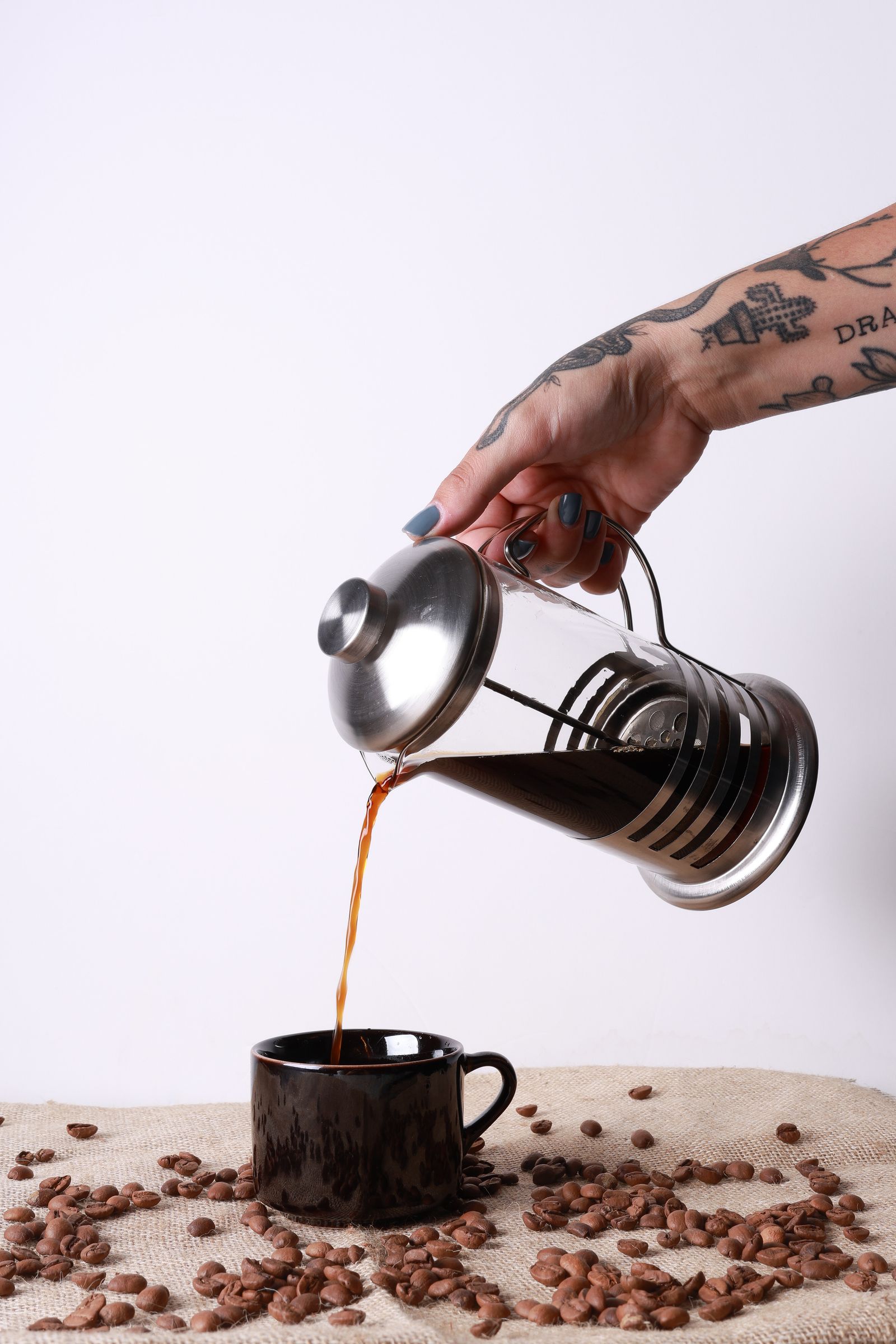
The French press is the oldest idea here and still the easiest to love. Coarse grounds steep directly in hot water for about four minutes, then a metal mesh plunger separates brew from bed. Because there is no paper filter, the coffee’s natural oils and fine particles stay in the cup, producing the heaviest, most velvety body of any common brew method. If your ideal coffee is rich, warming, and substantial — the kind that stands up to milk — nothing else in this comparison gets there.
Where it wins: batch size, price, and forgiveness. A standard press makes three or four mugs in one go, which makes it the natural pick for couples and households. Technique barely matters — if you can pour water and wait, you can make good French press coffee, and the method is remarkably tolerant of cheaper grinders. Entry prices are the lowest of the three methods, and a well-made press can last decades because there is almost nothing to break except the beaker, which is usually replaceable on its own.
Honest drawbacks: cleanup is genuinely the worst here — a beaker full of wet, coarse grounds that want to go everywhere except the compost bin, plus a mesh filter that needs regular disassembly to stay fresh. The unfiltered style also means sediment at the bottom of your cup and a muddier flavor profile that can blur the distinctive notes of expensive single-origin beans; the most common complaint from owners is that last gritty sip. And because the coffee keeps steeping as it sits on the grounds, the final cup from the pot is always more bitter than the first unless you decant.
Buy it if you brew multiple cups at once, love a heavy-bodied cup, or want the lowest-cost entry into good coffee. Skip it if sediment bothers you, you drink slowly from the pot, or you are buying delicate light-roast beans whose subtleties deserve a cleaner cup.
Pour-over: the connoisseur’s ritual
Pour-over is what coffee shops use for their most expensive beans, and there is a reason: no method extracts more clarity. Hot water, poured slowly and deliberately over a bed of grounds in a paper-lined cone, produces a cup with tea-like transparency where floral, fruity, and delicate notes actually show up instead of hiding under body and oils. When people describe tasting blueberry or jasmine in a coffee, they are almost always describing a pour-over.
Where it wins: flavor ceiling and the ritual itself. For many devotees the three or four minutes of measured pouring is the point — a small, focused, screens-down start to the day. The equipment is also beautiful in a way plungers are not, and the entry cost can be tiny: a simple plastic dripper and filters sit firmly in the $ tier. The $$$ only arrives when you add the gooseneck kettle and scale that the method genuinely benefits from.
Honest drawbacks: pour-over is the least forgiving method in this comparison. Grind size, water temperature, pour speed, and timing all visibly change the cup, which is thrilling when you nail it and frustrating when a rushed Tuesday brew comes out sour or hollow. It demands your full attention for the whole brew — there is no walking away — and it scales poorly beyond two cups. Owners consistently report a learning curve of a few weeks before results stabilize, and without a decent burr grinder the method’s advantages largely evaporate.
Buy it if you treat coffee as a hobby, buy quality beans, and enjoy a hands-on morning ritual. Skip it if you want caffeine with minimal thought, brew for several people, or are not ready to invest in a proper grinder.
How we compared
We judged the three methods on the factors that decide whether a brewer stays on your counter or migrates to a cabinet: cup quality and character, hands-on time, batch flexibility, tolerance for imperfect technique, cleanup burden, and true cost of ownership including grinders, filters, and accessories. We weighted everyday reality over ideal conditions — how each method behaves on a rushed weekday, not just a leisurely Sunday — and drew on the consistent patterns in long-term owner experience rather than one-off first impressions. Because street prices vary widely across brands and bundles, we use price tiers ($, $$, $$$) instead of exact figures. It is the same approach we take in our air fryer face-off and our stand mixer comparison.
Frequently asked questions
Which method makes the strongest coffee?
Strength is mostly about your coffee-to-water ratio, which you control in every method. The French press tastes strongest because its oils and fine particles create a heavier body, while the AeroPress can brew a small, concentrated cup that resembles espresso. If you want intensity, use more coffee — any of the three will oblige.
Do I really need a special grinder?
A burr grinder helps every method, but the need varies. Pour-over benefits most — uneven grounds visibly harm the cup. The AeroPress and French press are far more tolerant, and pre-ground coffee at the right coarseness produces respectable results in both while you decide whether to invest.
Which is cheapest over five years?
The French press, usually. It has no recurring filter cost and the hardware is inexpensive and durable. The AeroPress and pour-over both consume paper filters — a small expense, but a real one — and pour-over owners tend to accumulate kettles, scales, and drippers over time in a way press owners do not.
Is unfiltered French press coffee bad for cholesterol?
Unfiltered brews carry compounds from coffee oils that paper filters largely remove, and these have been linked to modest cholesterol effects in people who drink a lot of unfiltered coffee. For most moderate drinkers it is not a practical concern, but if it matters to you, paper-filtered methods like pour-over and the AeroPress are the cautious choice — and a question for your doctor, not a coffee blog.
Can one household justify owning two of these?
Easily — they are cheap enough that pairing is common. The classic combination is a French press for weekday multi-cup duty plus a pour-over setup for weekend single cups, or an AeroPress at the office alongside either at home. The methods complement each other more than they compete.
Bottom line
If one brewer has to do everything, make it the AeroPress: it makes excellent coffee quickly, forgives sleepy technique, cleans up in seconds, and travels anywhere. Choose the French press when mornings mean multiple mugs or when rich, heavy-bodied coffee is the whole point — no method delivers more comfort per dollar. Choose pour-over when coffee is a hobby rather than a utility: its flavor ceiling is the highest here, and the ritual is a feature, not a chore. There is no wrong answer among the three — only a wrong match between the method’s demands and your actual morning. Once the coffee corner is sorted, our skillet material showdown is the logical next upgrade for your kitchen.