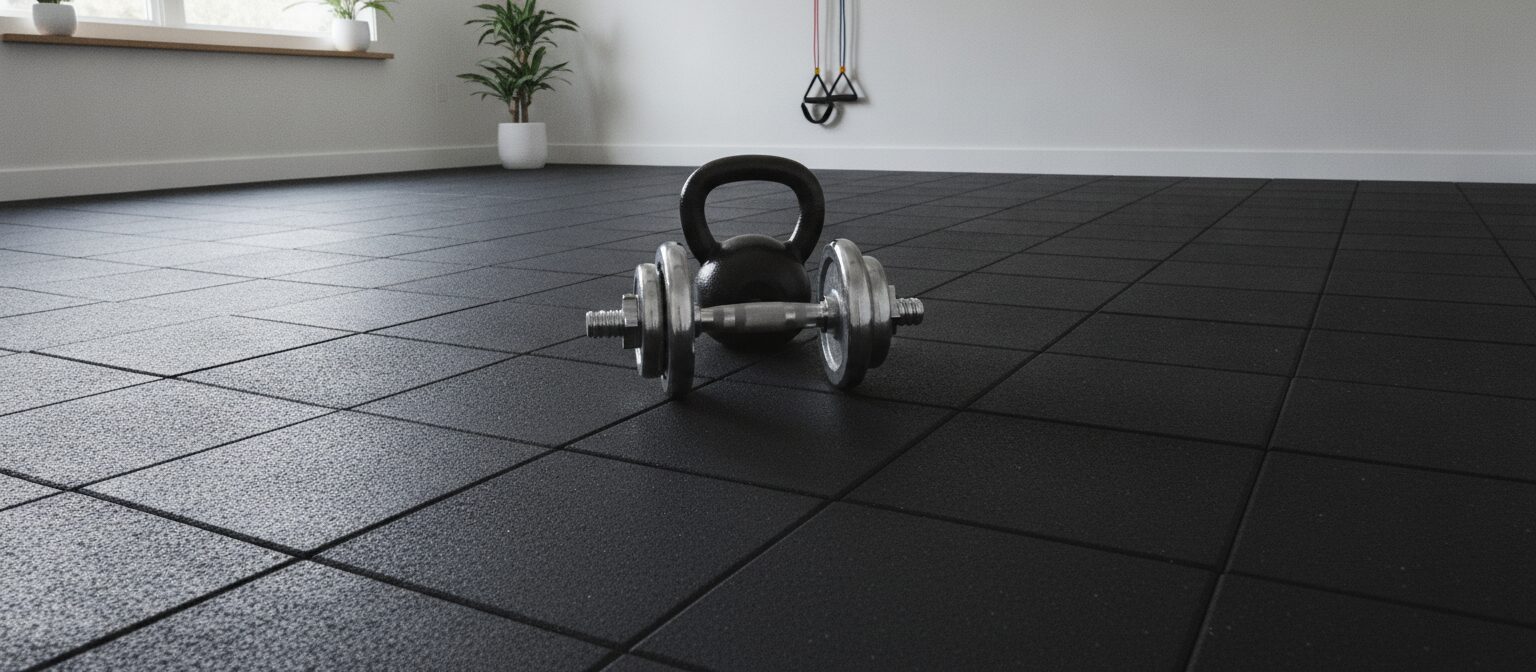
Flooring does not replace safe lifting habits. Always follow the manufacturer’s weight-capacity and installation guidance for any flooring product, and consult your equipment manufacturer’s specs before dropping loaded barbells or heavy dumbbells on any home gym surface.
For a 200-square-foot garage gym, ProsourceFit’s 1-inch foam tiles run about $1.98 per square foot once you buy in whole cases, Rubber-Cal’s Armor-Lock rubber tiles run about $4.96, and FlooringInc’s custom-cut rolled rubber lands at roughly $1.58 — the cheapest of the three despite being true rubber. Foam wins on price and softness but is not built for dropped weights. Rubber, whether tiled or rolled, is the floor to buy if you lift heavy.
At a glance
- Best overall: Rubber-Cal Armor-Lock (Fitness) interlocking rubber tiles — a weight-room-grade surface that handles dropped dumbbells without adhesive or a subfloor.
- Best budget pick: ProsourceFit interlocking foam tiles — the least expensive way to cover a floor for stretching, cardio, and bodyweight work.
- Best for large, permanent spaces: FlooringInc rolled rubber — custom-cut sheets that skip the interlocking seams and, per current site pricing, actually undercut both tile options.
- Skip if you drop weights: Foam tiles. Manufacturers market them as anti-fatigue exercise mats, not weight-room flooring.
How the three flooring types compare
These are not three competing brands so much as three different materials, each sold under a specific product line so you can find and price them yourself. The table below lines up the specs that actually change how a home gym feels to train on.
| Attribute | ProsourceFit Foam Tiles | Rubber-Cal Armor-Lock Tiles | FlooringInc Rolled Rubber |
|---|---|---|---|
| Material | EVA foam | Recycled rubber | Recycled rubber |
| Thickness (tested SKU) | 1 inch | 3/8 inch | 3/8 inch |
| Format | Interlocking puzzle tiles with border strips | Interlocking tiles, no adhesive needed | Custom-cut rolls, 4 ft wide |
| Listed price per sq ft | $1.83 | $4.46 | from $1.58 |
| Seams | Visible puzzle-cut seams | Visible interlocking seams | Seamless within a roll width |
| DIY install difficulty | Easiest — cuts with scissors or a utility knife | Easy, but tiles are heavier to handle | Moderate — rolls are bulky for one person |
| Rated for dropped weights | No, per the manufacturer’s own “anti-fatigue exercise” framing | Yes, sold specifically as a “Fitness” line | Yes, sold as heavy-duty gym flooring |
| Best surface for | Yoga, stretching, cardio, kids’ play areas | Weightlifting corners, dropped dumbbells | Full garage or basement gym floors |
Prices above reflect the listed per-square-foot pricing on Home Depot’s product pages for the ProsourceFit and Rubber-Cal SKUs, and FlooringInc’s own site pricing for its 3/8-inch heavy-duty rubber roll, all as of this writing — retailers change prices and run sales often, so treat these as directional rather than fixed.
What it actually costs to floor a 200-square-foot home gym
Per-square-foot pricing hides a real-world detail: you cannot buy exactly the square footage you need. Tiles ship in fixed-size cases, so you always round up and pay for a bit of overage. Rolls, by contrast, are cut to your exact length. We ran the math for a typical 200-square-foot garage gym — roughly a two-car-garage corner — using each product’s actual case size and listed price.
| Flooring | Case/roll size | Cases needed for 200 sq ft | Total spent | Real cost per sq ft used |
|---|---|---|---|---|
| ProsourceFit foam tiles | 24 sq ft per case, $43.99 | 9 cases (216 sq ft) | $395.91 | $1.98 |
| Rubber-Cal Armor-Lock tiles | 44.4 sq ft per case, $198.21 | 5 cases (222 sq ft) | $991.05 | $4.96 |
| FlooringInc rolled rubber | 4 ft wide, cut to length | One 4′ x 50′ roll (200 sq ft exactly) | $316.00 | $1.58 |
Two things jump out. First, foam tiles cost roughly 60% less than rubber tiles for the same footprint, which is the entire case for using them anywhere you are not dropping iron. Second, rolled rubber is the cheapest option in this comparison overall, because custom-cut lengths avoid the case-rounding waste that tiles force on you — you are not paying for 16 to 22 extra square feet you did not ask for. If your room is a clean rectangle, rolled rubber is the best-value way to get a true rubber surface.
Tiles still win on flexibility: the leftover pieces from rounding up become spares for high-wear spots under a squat rack, and you can pull up and relocate individual tiles if you move. A single 50-foot roll is not something you take with you to a new address.
ProsourceFit foam tiles: the budget pick, with a real limit
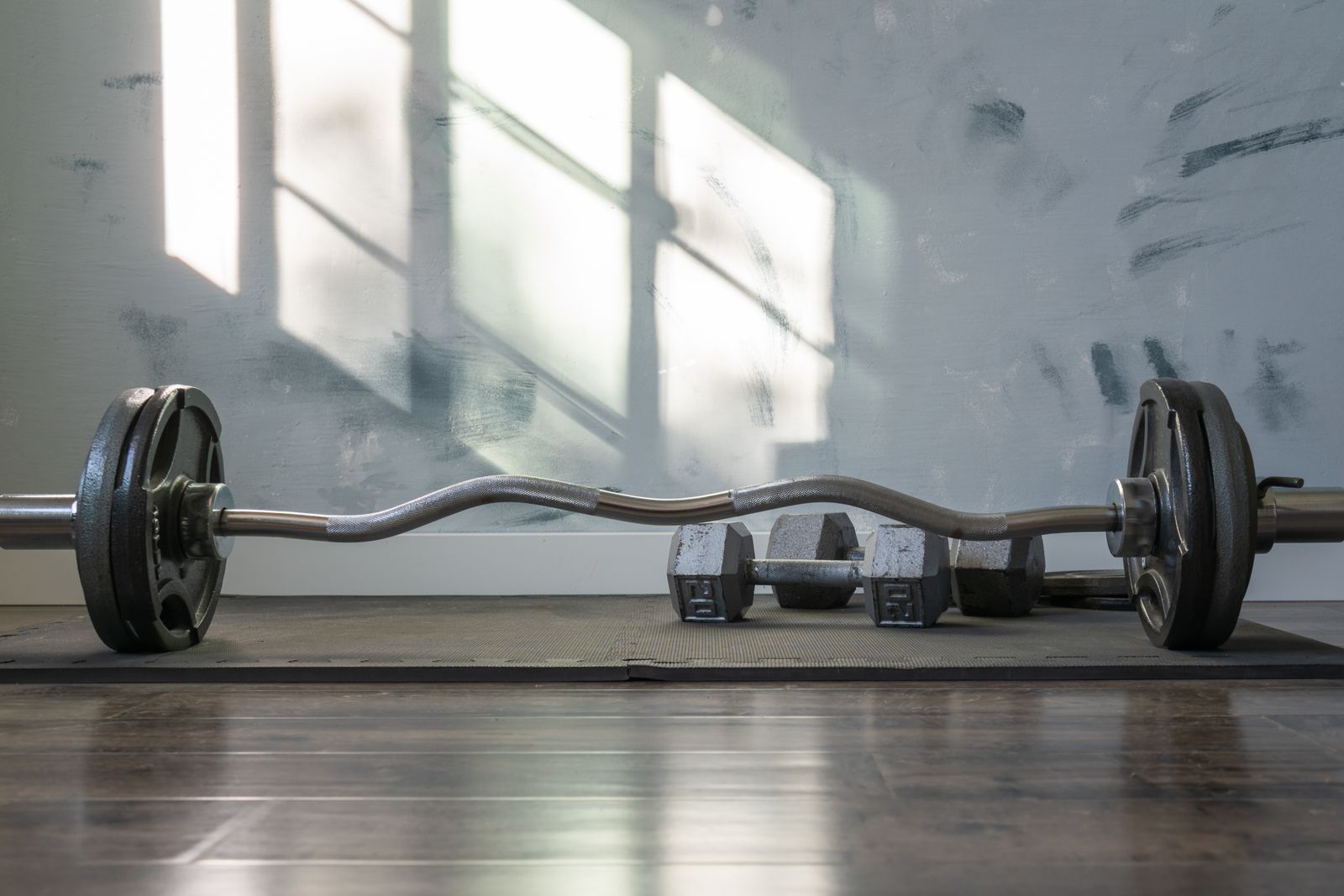
ProsourceFit’s EVA foam puzzle tiles are the cheapest way to stop training on bare concrete or carpet. At under $2 per square foot in real-world cost, they cover a garage floor for less than the price of a pair of dumbbells.
Where they win: Foam is soft underfoot, quiet, warm compared to concrete, and light enough to cut and install solo in an afternoon with scissors or a utility knife. For yoga, stretching, bodyweight circuits, or a kids’ play corner that doubles as a workout space, they are genuinely the right tool.
Where they fall short: ProsourceFit itself markets this line as an “anti-fatigue exercise” mat, not weight-room flooring, per the product description on Home Depot’s listing — and owner reviews across major retailers consistently flag the same pattern: loaded barbells and dropped dumbbells dent and eventually tear EVA foam. That is a dealbreaker if your training includes deadlifts, cleans, or any dumbbell heavier than what you would comfortably set down by hand.
- Pros: Lowest cost, softest surface, easiest DIY install, good sound dampening for apartments below.
- Cons: Dents and tears under heavy or dropped weight, visible seams, less durable long-term than rubber.
- Best for: Yoga and stretching zones, cardio machines, bodyweight training, family/kids areas.
Rubber-Cal Armor-Lock tiles: built for the weight-room corner
Rubber-Cal sells this SKU under its “Armor-Lock (Fitness)” name specifically, which signals what it is designed for: a floor that survives dropped iron. The interlocking edges click together without glue or tape, so tiles can be lifted and reused if you move.
Where they win: Rubber absorbs impact and resists denting far better than foam, and the interlocking format means no adhesive, no subfloor prep, and no professional installer. It is the more premium-feeling surface underfoot and holds up to years of loaded barbell and dumbbell use.
Where they fall short: At roughly $4.96 per square foot in real-world cost, it is the most expensive option here by a wide margin — nearly 2.5 times the price of the other two. New rubber tiles also commonly carry a noticeable rubber odor for the first days to weeks, a pattern reported consistently enough in owner feedback across rubber-flooring retailers that it is worth planning for, especially in an enclosed basement rather than a ventilated garage. The tiles themselves are heavier than foam, which makes trimming custom edges more effort.
- Pros: Genuinely rated for weightlifting use, no adhesive required, portable if you move, better long-term durability than foam.
- Cons: Highest cost per square foot of the three, initial off-gassing smell, heavier to cut and handle.
- Best for: A dedicated squat rack, bench, or free-weight corner where dropped weight is a given.
FlooringInc rolled rubber: the best value for a full garage floor
Sold in 4-foot-wide rolls cut to whatever length you need, this 3/8-inch heavy-duty rubber roll is the same nominal thickness as the Rubber-Cal tiles above, but priced and delivered differently — and, per our cost math, it comes out cheaper per square foot than either tile option once case-rounding waste is factored in.
Where it wins: A seamless roll means no interlocking edges to shift, curl, or trap dirt and dust between tiles — a common long-term complaint with any interlocking floor. For a rectangular garage or basement you plan to keep flooring in for years, one continuous sheet looks cleaner and is easier to sweep or vacuum than dozens of tile seams.
Where it falls short: A 50-foot roll is heavy and awkward for one person to unroll, position, and cut accurately; plan on a second set of hands. Odd-shaped rooms generate more cutting waste than tiles would, since you are working with a fixed roll width. And unlike interlocking tiles, a large glued-down or friction-fit rubber roll is not something you can easily pick up in sections and take to a new house.
- Pros: Lowest real-world cost per square foot in our math, no interlocking seams, true rubber durability for dropped weight.
- Cons: Harder to install solo, more waste in irregularly shaped rooms, not practical to relocate.
- Best for: A rectangular garage or basement gym you intend to keep put for years.
Which floor fits your gym?
The right flooring depends less on brand and more on what you are actually putting on top of it.
- Heavy lifting or dropped weights: Rubber-Cal tiles or FlooringInc rolled rubber. Skip foam entirely.
- Yoga, cardio machines, or a kids’ corner: ProsourceFit foam tiles. You get comfort and price with no downside, since nothing heavy is landing on it.
- Renting or planning to move: Interlocking tiles, foam or rubber, since sections lift up and travel with you. A glued or friction-fit rubber roll does not.
- A full, permanent garage gym floor: FlooringInc rolled rubber, for the cleanest look and, per our math above, the lowest real cost per square foot.
- Mixed-use space (weights and mat work): Rubber tiles under the rack and free-weight area, foam tiles in a separate stretching zone — plenty of home-gym owners split the floor this way rather than picking one material for the whole room.
How we compared
We built this comparison from publicly listed manufacturer and retailer specifications — material, thickness, format, and current pricing — for a representative SKU in each flooring category, rather than from hands-on testing. The cost-per-square-foot math is our own calculation, built from each product’s real case or roll size and listed price at the time of writing, not a figure any of these brands publish themselves.
The durability and odor observations reflect patterns that recur consistently across owner reviews on major retail sites and in how each manufacturer positions its own product (an “anti-fatigue exercise” mat versus a “Fitness”-branded weight-room tile), not a single source or a lab test. Prices and product availability change; always confirm current pricing, thickness, and weight-capacity guidance directly with the retailer before buying. Read more about how we approach comparisons on our editorial standards page. Prices are approximate, current as of publication, and change frequently — confirm the latest price with the retailer before buying.
Frequently asked questions
Is foam or rubber better for a home gym?
Rubber is better if you lift weights, especially anything you might drop, since foam is designed as an anti-fatigue exercise surface rather than weight-room flooring. Foam is fine, and cheaper, for yoga, cardio, and bodyweight-only spaces.
What thickness of rubber flooring do I need for a home gym?
3/8 inch is a common baseline thickness for both tiles and rolled rubber and is what we priced in this comparison. Thicker options exist from most of these brands for rooms with heavier dropped weight, but always check the manufacturer’s own weight-capacity guidance for your specific equipment before buying.
Is rolled rubber cheaper than rubber tiles?
In our cost breakdown for a 200-square-foot room, yes: custom-cut rolled rubber worked out to about $1.58 per square foot used versus about $4.96 for interlocking rubber tiles, mainly because rolls are cut to your exact size while tiles are sold in fixed case sizes that force you to buy overage.
Do rubber gym floors smell?
New rubber flooring commonly has a noticeable smell for the first several days to weeks, a pattern widely reported in owner reviews of rubber gym flooring. Ventilating the space and letting tiles or rolls air out before your first session generally helps it fade.
Can I install home gym flooring myself?
Yes, all three types here are designed for DIY installation without adhesive. Foam tiles are the easiest to cut and place solo. Rubber tiles are heavier but still manageable alone. Rolled rubber is the most physically demanding to install because of roll weight and size, so a second person makes it much easier.
Bottom line
If you are dropping weight, buy rubber, not foam — Rubber-Cal’s Armor-Lock tiles or FlooringInc’s rolled rubber, depending on whether you value tile portability or roll-level seamlessness and lower real-world cost. If your floor only has to survive yoga mats, a rower, and bodyweight circuits, ProsourceFit’s foam tiles cover the same square footage for a fraction of the price. Match the flooring to what actually lands on it, not to whichever option looks cheapest on the shelf tag.
For more home gym setup guidance, browse our Home Gym category, compare benches and power towers in our adjustable bench vs. flat bench vs. power tower guide, see how adjustable dumbbells stack up in Bowflex vs. PowerBlock vs. REP QuickDraw, or check out our yoga mat comparison if your flooring plan includes a dedicated stretching zone.
]]>