Some links on our site may earn us a commission at no extra cost to you. Learn more.
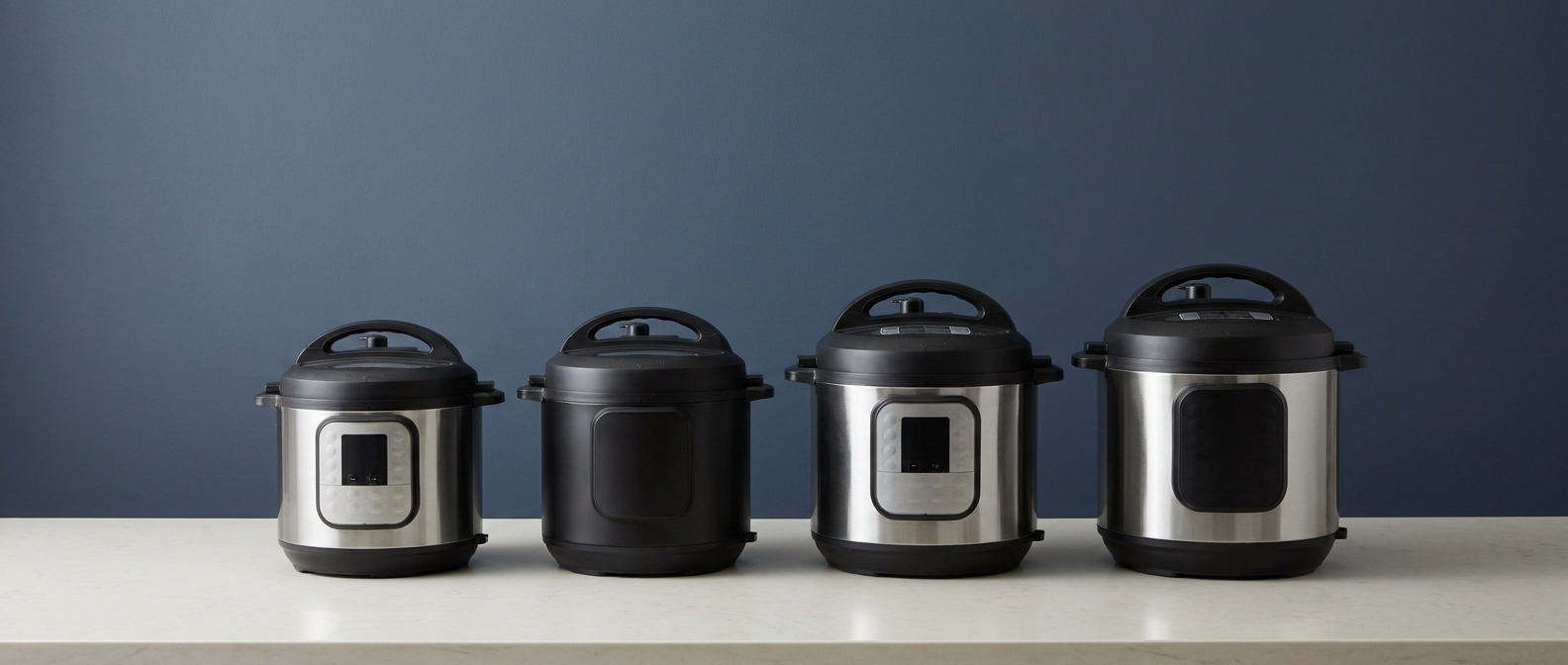
The best electric pressure cooker for most kitchens is the Instant Pot Duo Plus — it posted the top overall score in TechGearLab’s lab testing and costs less than half what the premium competition asks. The Presto 02141 is the budget answer, the Breville Fast Slow Pro is the meat-cooking perfectionist’s upgrade, and the Ninja Foodi Smart XL is the pick when you want one machine to pressure cook and air fry. The interesting part is what happens when you divide the prices by capacity and by performance — so let’s start with the tables.
Start here: the two tables that decide it
List prices, capacities, and 0–100 lab scores below come from TechGearLab’s tested pressure cooker rankings, where the Duo Plus earned Editors’ Choice, the Presto earned Best Buy, and the Ninja was named its versatility pick.
| Model | List price | Capacity | Lab score (TechGearLab) | Award |
|---|---|---|---|---|
| Instant Pot Duo Plus | $150 | 6 qt | 86 | Editors’ Choice |
| Breville Fast Slow Pro | $330 | 6 qt | 84 | Editors’ Choice (upgrade) |
| Ninja Foodi Smart XL | $350 | 8 qt | 83 | Top Pick, versatility |
| Presto 02141 | $102 | 6 qt | 75 | Best Buy |
Now the math the product pages never run. The middle column prices each usable quart of cooking capacity; the right column is what one point of tested performance costs you — our value index, computed by dividing list price by lab score.
| Model | Cost per quart | Cost per performance point |
|---|---|---|
| Presto 02141 | $17.00 | $1.36 |
| Instant Pot Duo Plus | $25.00 | $1.74 |
| Ninja Foodi Smart XL | $43.75 | $4.22 |
| Breville Fast Slow Pro | $55.00 | $3.93 |
Two things jump out. First, the Presto is cheap per quart and per point — but it trails the Duo Plus by eleven lab points, and in this category those points show up as less even sauté heat and fewer refinements, not just missing presets. Second, the two premium machines cost two to three times as much per performance point as the Instant Pot while scoring slightly lower overall. You are not buying better pressure cooking at the top of this market; you are buying a second cooking method (Ninja) or a more automated experience (Breville).
The picks, in one box
- Best overall: Instant Pot Duo Plus — top tested score, sane price, the least you’ll ever think about dinner.
- Best budget: Presto 02141 — the lowest cost per quart and per performance point in the group.
- Best upgrade: Breville Fast Slow Pro — automatic steam release and the group’s best meat results.
- Best two-in-one: Ninja Foodi Smart XL — pressure cooking plus genuine air frying under one lid.
Instant Pot Duo Plus: the score-per-dollar king
TechGearLab’s testers scored the Duo Plus highest of anything in this comparison and praised its overall cooking performance and intuitive controls, along with an improved steam-release valve over earlier Instant Pots. That tracks with what the brand has always done well: the pressure-cooking fundamentals — fast ramp-up, steady pressure, predictable results with rice, beans, stocks, and braises — wrapped in controls a first-timer can operate without the manual.
There is a practical bonus buried in the design, one Homes & Gardens highlighted in its own Instant Pot vs Ninja head-to-head: the Instant Pot’s inner pot has no nonstick coating to baby, and it can go on a stovetop or into an oven, so one vessel handles searing, pressure cooking, and finishing. Multiple components are dishwasher-safe. Weak spots, per the same lab testing: the pot’s shape makes hand-scrubbing corners mildly annoying, the sauté function runs hot and needs watching, and the footprint is bigger than the capacity suggests.
Choose it if you mainly want excellent pressure cooking at a fair price. Look elsewhere if air frying under the same lid matters to you — that is the one trick it doesn’t do.
Presto 02141: the budget seat at the table
The Presto 02141 earned TechGearLab’s Best Buy award by doing the core job — pressure cooking weeknight staples — for around a hundred dollars. At $17.00 per quart and $1.36 per performance point, it is the value outlier of this group by a wide margin, and its nonstick pot releases stuck-on rice more easily than bare stainless.
The compromises are honest rather than hidden. Its 75-point lab score reflects fewer refinements and a less polished experience, the nonstick pot that helps with cleanup will eventually wear in a way stainless never does, and there is nowhere to park the lid while you serve — a small thing you will notice weekly. Nothing about it feels premium. Everything about it works.
Choose it if you want the cheapest reliable route into pressure cooking, or a second unit for a cabin or RV. Look elsewhere if you cook from the sauté function daily — the Duo Plus’s eleven extra lab points live mostly in that territory.
Breville Fast Slow Pro: automation as the luxury
The Fast Slow Pro’s headline feature is the one you stop thinking about: it vents steam automatically at the end of a cook, so there is no hovering with a wooden spoon over a hissing valve. TechGearLab scored it 84 — Editors’ Choice territory — and singled out its meat results as the best it tested, along with an unusually deep preset library. Fit and finish are what you’d expect from Breville: this is the machine that looks at home next to an espresso setup.
The case against it is the second table above. At $55.00 per quart, it is the most expensive capacity in this comparison — more than triple the Presto — while scoring two points below the Instant Pot. Cleaning is also reported to be fussier than average. You are paying roughly $180 over the Duo Plus for automatic venting, superior roasts, and nicer hardware, not for better everyday pressure cooking.
Choose it if braises and roasts are the main event and you value hands-off venting. Look elsewhere if you’re optimizing dollars — the value math is the weakest here.
Ninja Foodi Smart XL: two appliances, one footprint
The Ninja is the only machine here that genuinely air fries, and TechGearLab called it the most versatile of the group — pressure cooking, crisping, and even dehydrating from the same 8-quart base. For households weighing a pressure cooker and an air fryer, its $350 price should really be compared against buying both appliances, which flips its value math from worst in the group to arguably best. Its 8-quart pot is also the largest capacity in this comparison, with a wide shape that fits a whole chicken more gracefully than the tall 6-quart pots.
The trade-offs are physical. At around 25 pounds it is a two-hand appliance, the countertop footprint is substantial, and Homes & Gardens notes that hinged SmartLid designs can be too tall to open under standard upper cabinets — measure before you buy. Its pot also can’t move to a stovetop or oven the way the Instant Pot’s can, and the crisping performance, while real, won’t quite match a dedicated basket air fryer’s capacity per dollar — we ran that category’s numbers separately in our air fryer face-off.
Choose it if counter space is scarce and you’d otherwise buy two machines. Look elsewhere if you already own an air fryer you like — you’d be paying twice for the same trick.
Which size do you actually need?
Six quarts feeds one to four people comfortably and remains the sweet spot for most kitchens; it’s also the size every recipe assumes. Eight quarts earns its space for families of five or more, serious batch cookers, and stock makers — but remember that bigger pots take longer to come to pressure, so the “instant” part gets slightly less instant. Homes & Gardens also points out that Instant Pot’s entry-level models start under $100 while the cheapest Ninja Foodi runs closer to $199, so downsizing your feature list saves more money on the Instant Pot side of the aisle. If your real question is pressure cooking versus other batch-cooking methods entirely, our slow cooker vs pressure cooker vs sheet pan comparison tackles that decision first.
How we compared
We built this comparison on published lab results and long-term owner feedback rather than hands-on testing, which we don’t claim. Scores, list prices, and award designations come from TechGearLab’s tested pressure cooker rankings; design and usability observations are drawn from Homes & Gardens’ Instant Pot vs Ninja Foodi head-to-head and from consistent patterns in owner reviews across retailers. The cost-per-quart and cost-per-performance-point calculations are our own arithmetic on those published figures. Where evidence is thin, we say so. Our editorial standards explain how we handle sourcing, and the rest of our countertop coverage lives in Kitchen & Cooking.
Frequently asked questions
Is an electric pressure cooker worth it over a stovetop model?
For most people, yes. Electric models regulate pressure themselves and switch to keep-warm automatically, so you can leave the kitchen. Stovetop cookers reach higher pressure and cook a bit faster, but they demand attention the whole time — the opposite of why most buyers want one.
Do more cooking functions mean a better multicooker?
Not really. Most functions on a “14-in-1” panel are the same heating element run at different temperatures with a different label. Judge a multicooker on its pressure cooking, its sauté evenness, and — if it claims to air fry — whether it truly crisps. The label count is marketing.
Can an electric pressure cooker replace a rice cooker?
It can cook excellent rice, and for occasional batches it’s plenty. Dedicated rice cookers still win on texture consistency and keep-warm quality for daily rice eaters — we compared the leading machines in our rice cooker head-to-head.
How long do these machines last?
The heating element and pressure system typically outlast everything else; the parts that age are sealing rings, which absorb odors and stretch, and nonstick pot coatings where present. Rings are inexpensive consumables — replace them yearly with heavy use and any of these machines should serve for many years.
Is the 8-quart size worth it for a small household?
Usually not. It takes longer to pressurize, hogs more counter and cabinet space, and most recipes are written for 6 quarts. Buy 8 quarts for five-plus eaters or serious meal preppers; otherwise the standard size is the better daily tool.
The bottom line
Run the numbers and the market sorts itself. The Instant Pot Duo Plus wins the middle — and the middle is where most kitchens live — with the group’s best tested score at a price that keeps its value math honest. The Presto 02141 is the right call when the budget leads. The Breville Fast Slow Pro is a legitimate luxury for braise-and-roast households, and the Ninja Foodi Smart XL only makes sense — but makes excellent sense — when it replaces two appliances at once.