Some links on our site may earn us a commission at no extra cost to you. Learn more.
Robot vacuums used to be a novelty that bumped around the living room and got stuck under the couch. In 2026, the good ones map your home in minutes, empty their own bins, mop hard floors, and avoid the phone charger you left on the rug. That progress has come with a crowded, confusing market — and four names dominate almost every shopping conversation: Roomba, Roborock, Shark, and Eufy.
The frustrating part is that all four brands make models across wildly different price ranges, so “Roomba vs Roborock” is really a question about which company’s approach fits your home. Roomba built its reputation on rugged simplicity and pet-friendly brush design. Roborock pushes the technology envelope hardest. Shark undercuts both on price while keeping the features most people actually use. Eufy owns the entry level, where quiet, slim, and cheap matter more than smart.
Quick answer: Roborock is the best overall choice for most homes thanks to superior navigation and mopping, Eufy is the best budget entry point, Roomba remains the pick for pet-heavy households that value durability, and Shark hits the sweet spot for feature-per-dollar shoppers.
Our verdict at a glance
- Best overall: Roborock — the strongest navigation, obstacle avoidance, and vacuum-mop combos in the class
- Best budget: Eufy — slim, quiet, and capable enough for smaller or simpler homes at a $ price
- Best upgrade: A flagship Roborock with a full self-emptying, self-washing dock — the closest thing to hands-off floors
- Best for pet hair: Roomba — dual rubber brush rolls that resist tangles better than bristle designs
- Best value features: Shark — self-empty docks and solid suction at mid-tier prices
How the four brands compare
| Attribute | Roomba | Roborock | Shark | Eufy |
|---|---|---|---|---|
| Navigation and mapping | Good, methodical | Excellent, fast and precise | Good on mid and upper models | Basic to good, varies by model |
| Pet hair handling | Excellent | Very good | Very good | Good |
| Mopping ability | Limited on most models | Class-leading on flagships | Basic where offered | Basic |
| App and smart features | Simple, reliable | Deepest feature set | Straightforward | Simple |
| Noise level | Moderate to loud | Moderate | Moderate | Quietest overall |
| Price tier | $$–$$$ | $$–$$$ | $$ | $–$$ |
Roomba: the durable pet-hair specialist
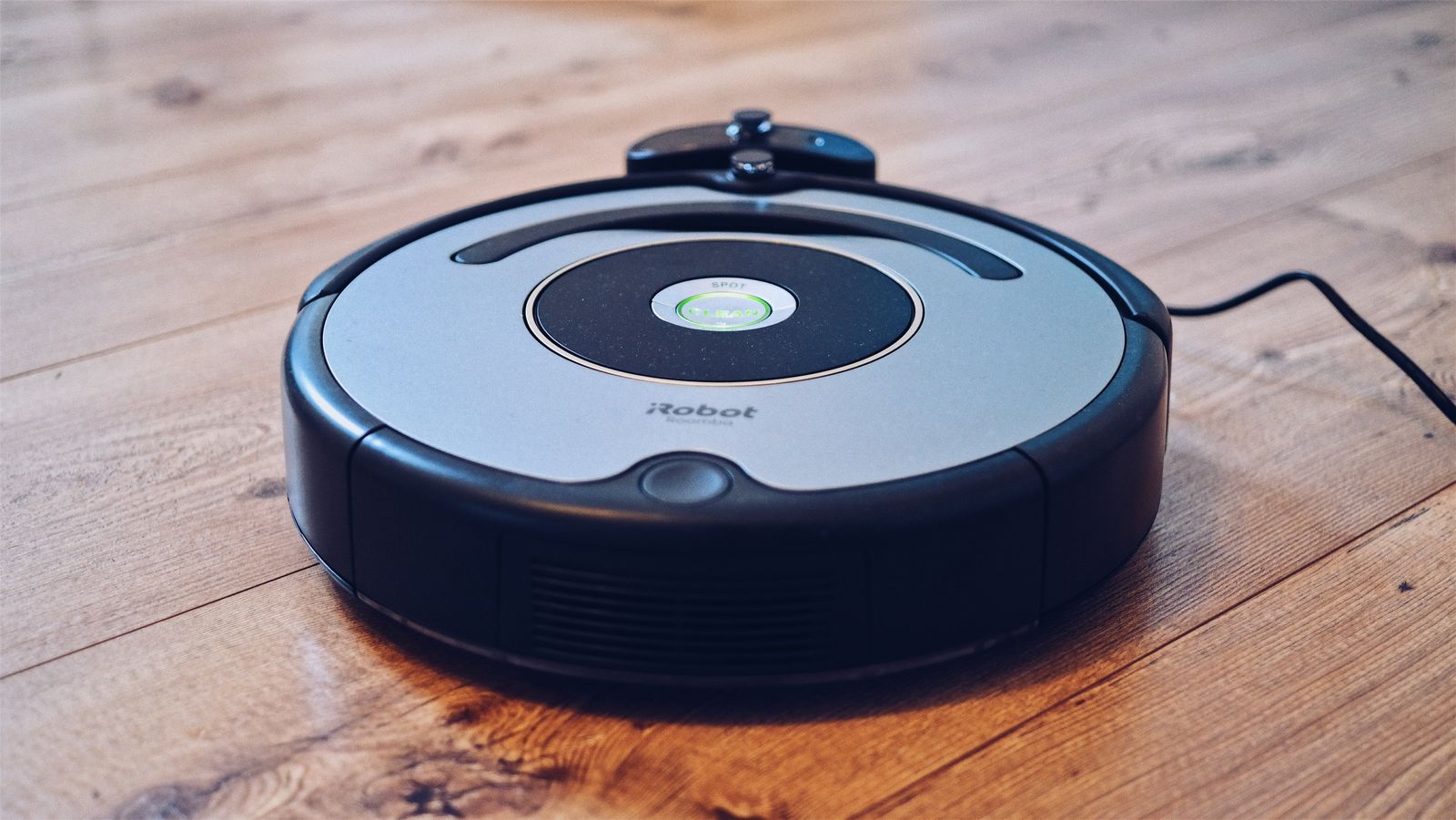
Roomba is the name that made robot vacuums a category, and the brand’s long head start shows in the hardware. Its signature dual counter-rotating rubber brush rolls are still the best answer anyone has found to long hair and pet fur, and its docks and bodies have a reputation for surviving years of daily runs.
Where it wins: hair management and longevity. Owners with shedding dogs and long-haired household members consistently report fewer tangle-related stoppages than with bristle-brush competitors. The app is uncluttered, scheduling is dependable, and replacement parts — filters, brushes, batteries — are easy to find years after purchase, which meaningfully extends the machine’s useful life.
Honest drawbacks: feature-for-feature, Roomba tends to cost more than comparable Roborock or Shark models, and its mopping options lag well behind Roborock’s flagship systems. The most common complaint is value: you are partly paying for the badge. Navigation, while reliable, is often slower and more meandering than the laser-guided precision of its Chinese rivals.
Who should buy it: pet-heavy households, buyers who prize durability and parts availability, and anyone who wants a simple, proven machine over a spec sheet.
Who should skip it: shoppers who want serious mopping or maximum smart features per dollar — Roborock does both better at similar prices.
Roborock: the technology leader
Roborock has spent the last several years out-innovating everyone. Its lidar navigation maps a whole floor quickly and accurately, its obstacle avoidance is the most trustworthy in the group, and its flagship docks wash and dry mop pads, refill water tanks, and empty dustbins with almost no human involvement.
Where it wins: nearly everything technical. Mapping is fast and precise enough for reliable room-by-room cleaning and no-go zones. Vacuum-and-mop hybrids genuinely wash hard floors rather than just dragging a damp pad, with mop lifting that protects carpet. The app is the deepest here — multi-floor maps, cleaning history, customizable routines — while remaining usable for non-tinkerers.
Honest drawbacks: the flagship models with the impressive all-in-one docks sit firmly in $$$ territory, and those docks are large — plan for real floor space in a closet or laundry room. The lineup is also sprawling and confusingly named, so comparing two Roborock models can feel like a research project in itself. Long-term parts support, while improving, does not yet match Roomba’s track record.
Who should buy it: anyone with mixed hard floors and carpet, smart-home enthusiasts, and buyers who want the least hands-on floor care available today.
Who should skip it: buyers on a tight budget and anyone who finds a wall of model numbers and app settings more annoying than empowering.
Shark: the value sweet spot
Shark came to robot vacuums from a strong upright-vacuum pedigree, and its strategy is simple: deliver the features most people actually use — strong suction, self-empty docks, decent mapping — at a noticeably lower price than the flagship brands.
Where it wins: price-to-feature ratio. A mid-tier Shark frequently matches the practical cleaning performance of pricier rivals on everyday dirt, and its self-emptying bases came down-market earlier than most, so hands-free dustbin management is available at the $$ tier. Its brush rolls handle pet hair well, and the app covers scheduling and room selection without drowning you in options.
Honest drawbacks: the software ecosystem is the weakest of the four. Mapping is usually adequate but less precise than lidar-based rivals, and owners’ most common complaints involve app connectivity hiccups and occasional lost maps. Obstacle avoidance on most models is basic, so a tidy floor before each run matters more than it does with a Roborock. Mopping, where offered, is an afterthought.
Who should buy it: pragmatists who want strong vacuuming and a self-empty dock without flagship pricing, especially in mostly carpeted homes.
Who should skip it: smart-home power users, and anyone whose floors are routinely scattered with cords, toys, or pet accidents that demand top-tier obstacle recognition.
Eufy: the budget gateway
Eufy built its following on slim, quiet, affordable robots that do one job — vacuuming — without fuss. The lineup has since grown upward into mapping models and self-empty docks, but the brand’s center of gravity remains the entry level, where it is very hard to beat.
Where it wins: price, noise, and fit. Eufy’s slimmer bodies slide under furniture that stops taller lidar-turret robots, and they are the quietest machines in this comparison — a real advantage in apartments or when running daytime cleanings during calls. For a small or single-level home with mostly hard floors and low-pile rugs, an inexpensive Eufy delivers most of the daily benefit of a robot vacuum at a fraction of the cost.
Honest drawbacks: entry models navigate semi-randomly rather than mapping, so coverage of larger homes is inconsistent and room-specific cleaning is off the table. Suction and brush design trail the other three on thick carpet, and long pet hair tangles more readily. The most common owner complaint is exactly what you would expect at the price: it is a good simple robot, not a smart one.
Who should buy it: first-time buyers, apartment dwellers, budget shoppers, and anyone furnishing a second floor or vacation home with a set-and-forget cleaner.
Who should skip it: large or multi-room homes that need methodical mapped coverage, and households with heavy-shedding pets on carpet.
Features worth paying for — and features that are mostly hype
Once you have picked a brand, the model decision comes down to which features earn their premium in your specific home. Three consistently justify the cost. Mapped navigation is the first: any home larger than a small apartment benefits enormously from room-by-room control and no-go zones, and it is the difference between a robot that cleans your home and one that wanders it. A self-empty dock is the second, for the reasons above — it converts maintenance from daily to monthly. The third is strong obstacle avoidance if your floors are realistically cluttered; families with young kids or pets should treat it as essential rather than optional, because a robot that eats a phone cable or spreads a pet accident erases months of goodwill in one run.
Other features age less well. Voice-assistant integration is pleasant but rarely used after the first week, most owners report. Maximum-suction numbers are marketing arms races — brush design and navigation matter more for real-world pickup than headline pascals. Camera-based home monitoring adds privacy questions for a feature few people actually want in practice. And mopping on any robot without pad-lifting or a washing dock tends to become a feature you disable after the second time you smell the pad. Spend your budget on navigation, the dock, and brushes, in that order, and treat everything else as a tiebreaker between two otherwise equal machines.
How we compared
We compared the four brands on the factors that determine day-to-day satisfaction rather than spec-sheet bragging rights: navigation quality and coverage, pet-hair and carpet performance, mopping usefulness, dock capabilities, app reliability, noise, and long-term serviceability, all weighed against each brand’s typical position in the $, $$, and $$$ tiers. Because each brand sells many models, we judged them on the strengths and weaknesses that hold consistently across their current lineups, and we leaned on recurring patterns in long-term owner feedback — the praise and complaints that surface again and again — rather than isolated experiences. For more of our head-to-head home coverage, browse the Home & Living category, or see our guide to choosing the right storage bins if decluttering is the other half of your floor-care problem.
Frequently asked questions
Is a self-emptying dock worth it?
For most people, yes — it is the single upgrade that changes a robot vacuum from a gadget you manage into an appliance you forget. If you empty a small onboard bin every day or two, the robot becomes a chore of its own. Budget buyers can reasonably skip it in small homes with little pet hair.
Do robot mops actually work?
The good ones now genuinely maintain hard floors — think daily upkeep of dust and light spills, not scrubbing dried spaghetti sauce. Roborock’s flagship systems, with rotating or vibrating pads and self-washing docks, are the most capable here. Basic drag-a-damp-pad mopping on cheaper models of any brand is closer to dusting the floor than washing it.
Which robot vacuum is best for pet hair?
Roomba’s rubber dual-brush design remains the benchmark for resisting hair tangles, with Roborock and Shark close behind. Whatever brand you choose, a self-empty dock matters even more with pets, because fur fills small onboard bins in a single run.
How long do robot vacuums last?
With basic care — clearing brushes, replacing filters, and swapping the battery when runtime fades — a quality robot commonly serves five years or more. Parts availability is the hidden variable: Roomba is strongest here, which is part of why we recommend it to buyers who plan to keep a machine for the long haul.
Should I wait for a newer model?
There is always a newer model coming; the category iterates yearly. The practical move is to buy a recent — not necessarily newest — model from the tier you need, since last year’s flagship at a discount routinely beats this year’s mid-ranger at the same price.
Bottom line
If you want the most capable robot for a mixed-flooring home and are willing to pay for it, buy a Roborock — nothing else automates floor care as completely. If pets rule your house and you want a machine that shrugs off fur for years, Roomba earns its premium. If you want the most useful features for the least money, Shark’s mid-tier is the smart compromise, and if you simply want clean-enough floors without spending much or thinking at all, Eufy is the easiest first robot to own. Whichever way you go, match the machine to your floors and clutter level first and the brand second — that single habit prevents most robot-vacuum regret.