
Some links on our site may earn us a commission at no extra cost to you. Learn more.
A rooftop cargo box solves the same problem three different ways depending on who makes it, and the right one depends less on brand loyalty than on how many miles a year it will actually ride up top. For most drivers, the Yakima SkyBox NX 16 is the sweet spot of capacity, mounting ease, and price; the Thule Motion 3 is the upgrade for families who load and unload constantly; and the SportRack Vista XL is the honest budget answer for a couple of trips a year. Below we sort the three by travel style — and run the fuel-economy math that quietly matters more than the sticker price.
Quick picks
- Best overall: Yakima SkyBox NX 16 — tool-free mounting, dual-side opening, and enough room for a family’s soft luggage at a mid-tier price.
- Best budget: SportRack Vista XL — 18 cubic feet for roughly a quarter of the flagship money, if you can live with its compromises.
- Best upgrade: Thule Motion 3 — the smoothest hardware, quietest aero shape, and the box that feels best twice a week rather than twice a year.
The three boxes, side by side
Capacities come from each manufacturer’s spec sheet; prices are typical street prices as of July 2026, rounded. All three require crossbars — none of these mounts to a bare roof.
| Box | Capacity | Typical price | Opening | Mounting |
|---|---|---|---|---|
| Thule Motion 3 (XL) | 18 cu ft | ~$950 | Both sides | Tool-free clamps with torque feedback |
| Yakima SkyBox NX 16 | 16 cu ft | ~$700 | Both sides | Tool-free clamps |
| SportRack Vista XL | 18 cu ft | ~$260 | Rear only | U-bolt hardware, wrench required |
How much does a rooftop cargo box cost you in gas?
More than most buyers budget for. According to fueleconomy.gov, the U.S. government’s fuel-economy site, a large rooftop cargo box cuts fuel economy by roughly 2–8% in city driving, 6–17% on the highway, and 10–25% at interstate speeds of 65–75 mph.
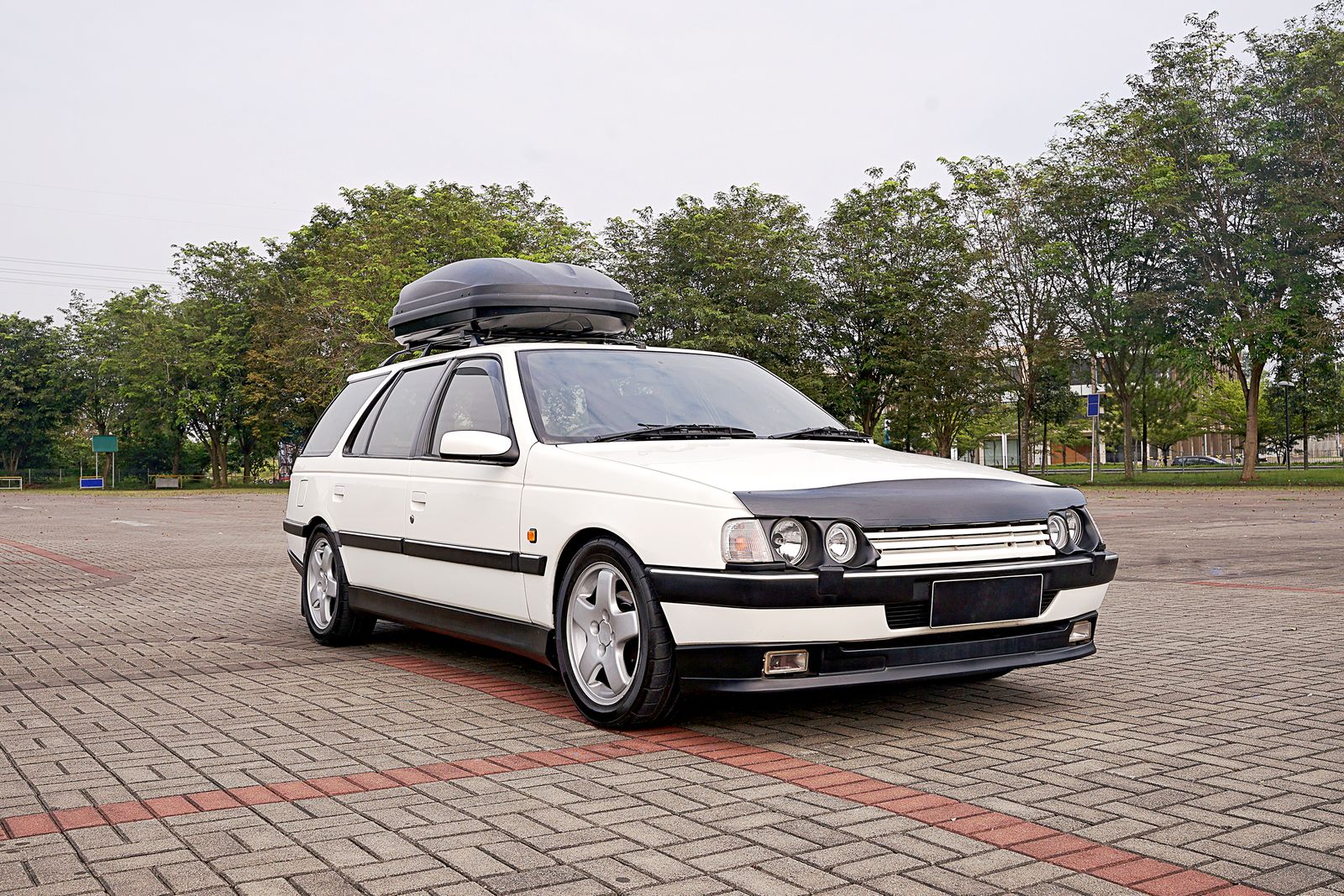
We turned those published ranges into trip dollars, because that’s the number you’ll actually feel. Assumptions, so you can re-run the math for your own car: a 3,000-mile round-trip vacation, a vehicle that averages 30 MPG unloaded, and gas at $3.20 per gallon.
| Scenario | Effective MPG | Fuel used | Fuel cost | Extra cost vs. no box |
|---|---|---|---|---|
| No box | 30.0 | 100 gal | $320 | — |
| Box, 6% penalty (easy highway) | 28.2 | 106 gal | $340 | +$20 |
| Box, 17% penalty (steady highway) | 24.9 | 120 gal | $386 | +$66 |
| Box, 25% penalty (fast interstate) | 22.5 | 133 gal | $427 | +$107 |
Two conclusions fall out of that table. First, a $260 budget box that adds $66 of gas per big trip quietly doubles its own price in about four vacations — the cheap box isn’t as cheap as it looks if it lives on your roof. Second, the single best money-saving accessory for any of these boxes is a garage hook: fueleconomy.gov’s own advice is to remove roof cargo when you’re not using it, and the math above shows why.
Which box fits how you actually travel?
You load the car every other weekend
Buy the Thule Motion 3. Frequent use is exactly what the extra money buys: clamps that click when they’re torqued correctly, lids that open from either side of the car, and a lock that won’t release the key until the box is actually latched — a small feature that prevents the classic highway-lid disaster. If the box goes on in June and comes off in September twice, this is over-buying; if it’s part of your routine, it’s the one you’ll stop thinking about.
You take one or two big trips a year
Buy the Yakima SkyBox NX 16. It keeps the two features that matter for occasional use — tool-free mounting so seasonal install isn’t a project, and dual-side opening so you’re not unloading from the traffic side at a rest stop — while costing meaningfully less than the Thule. Yakima also builds SkyBox shells with a high share of recycled material, per the company, if that factors into your pick.
You need maximum space for minimum money
Buy the SportRack Vista XL — it’s made by Thule’s budget division and offers flagship-class volume for a fraction of the cost. The compromises are real: rear-only opening means loading over the tailgate area, the U-bolt mounting wants a wrench and a second set of hands, and the shell is noisier at speed. For hauling duffels to a cabin twice a summer, none of that matters much.
The differentiators that actually decide it
Opening direction is the biggest day-to-day difference: dual-side lids (Thule, Yakima) let you load from the curb side anywhere, while rear-only lids (SportRack) are an ergonomic tax you pay every single stop. Mounting is the second: tool-free clamps make seasonal on-and-off a ten-minute job, while U-bolts make it a chore you’ll postpone — which, per the fuel table above, costs you money all year.
The dealbreaker to check before any purchase is clearance, in both directions. Measure your garage door height with the crossbars on, and check your vehicle manufacturer’s dynamic roof-load rating against the box weight plus cargo — the lower of the two limits wins. A box that won’t clear your garage becomes a box you remove constantly, which is an argument for lighter and tool-free.
How we compared
We compared current-production boxes using manufacturer spec sheets, retailer listings verified in July 2026, and recurring patterns in long-term owner feedback — wind noise, latch wear, and mounting friction are where these products earn or lose their reputations after year one. The fuel-cost table is our own arithmetic applied to fueleconomy.gov’s published penalty ranges. We don’t claim hands-on testing; our editorial standards explain how we work. More road-trip gear lives in our Outdoors & Travel section.
Frequently asked questions
Do I need crossbars for a rooftop cargo box?
Yes — all three boxes here clamp to crossbars, not to the roof itself. If your car has bare rails or a naked roof, budget for a crossbar system first and confirm its weight rating before choosing a box.
How much does a cargo box hurt gas mileage?
Per fueleconomy.gov, expect roughly a 6–17% hit in highway driving and 10–25% at interstate speeds of 65–75 mph. The penalty shrinks at lower speeds and disappears when you take the box off between trips.
Is a cheap cargo box safe at highway speed?
A properly mounted budget box is fine at legal speeds — the risk isn’t the shell, it’s installation shortcuts. Torque the hardware to spec, recheck it after the first hour of driving, and never exceed your vehicle’s roof-load rating.
What fits in 16 versus 18 cubic feet?
Sixteen cubic feet swallows roughly four to five soft duffels plus sleeping bags and odds and ends; eighteen adds space for a couple more bags or bulky items like camp chairs. Skis and long items care more about box length than volume, so check the listed interior length against your gear.
Bottom line
Match the box to your loading frequency, not your brand allegiance: Thule Motion 3 for constant use, Yakima SkyBox NX 16 for the annual vacation rhythm, SportRack Vista XL for occasional hauls on a budget — and take whichever one you buy off the roof between trips. Packing for the same trip? Our cooler face-off covers what rides inside the car, our beach wagon comparison handles the last hundred yards, and our paddle board guide is for what won’t fit in any box.