Some links on our site may earn us a commission at no extra cost to you. Learn more.
A note on little ears: sound machines in nurseries should be kept at low volume and well away from the crib. Follow the manufacturer’s placement guidance and ask your pediatrician what’s right for your baby — nothing here is medical advice.
Choosing a white noise machine looks trivial until you notice the four big names sell four different products. LectroFan generates seamless digital noise with no loops, the Yogasleep Dohm moves actual air with a real fan, Hatch bundles sounds into an app-and-subscription ecosystem, and Magicteam undercuts everyone at around $28. The short version: the LectroFan EVO is the best pure noise machine for most adults, the Dohm Classic is the pick if digital sound bothers you, Hatch is worth it mainly for nurseries and wake-up routines, and Magicteam wins any contest decided by price.
The pick box
- Best overall: LectroFan EVO — 22 non-looping sounds, no app, no subscription, one job done perfectly.
- Best budget: Magicteam — most of the LectroFan experience for well under half the price.
- Best upgrade: Hatch Restore 3 — a sound machine, sunrise lamp, and alarm in one, if you accept the subscription question.
- Best analog holdout: Yogasleep Dohm Classic — a real fan in a shell, the sound that started the category in 1962.
What kind of noise are you actually buying?
This is the spec that matters most and appears on no box. Cheap machines play short recorded files that loop, and once your brain finds the seam — the wave that crashes the same way every 30 seconds — it starts listening for it. LectroFan machines generate noise algorithmically, so the sound literally never repeats. The Dohm sidesteps the issue entirely: it’s a real electric fan inside a housing, producing genuine moving-air sound with two speeds and an adjustable tone collar. Hatch and Magicteam are digital; Magicteam markets its 20 sounds as non-looping, while Hatch doesn’t publish how its files are built.
Sticker price vs. what you’ll actually spend
Here’s the comparison we couldn’t find anywhere else: the three-year cost of ownership, including Hatch’s optional subscription and electricity where the maker publishes wattage. Hatch machines work without Hatch+ — the free tier keeps core sounds and alarms — but the library, stories, and extras that drive many purchases sit behind $4.99 a month or $49.99 a year.
| Machine | Price | Subscription | 3-year total (worst case) | 3-year total (no sub) |
|---|---|---|---|---|
| Magicteam | $27.99 | None | $27.99 | $27.99 |
| LectroFan Classic | ~$54.95 | None | $54.95 | $54.95 |
| LectroFan EVO | $65.95 | None | $65.95 | $65.95 |
| Yogasleep Dohm Classic | $49.99 | None | ~$77 with electricity* | ~$77 with electricity* |
| Hatch Rest 2nd Gen | $69.99 | Hatch+ optional, $49.99/yr | $219.96 | $69.99 |
| Hatch Restore 3 | $169.99 | Hatch+ optional, $49.99/yr | $319.96 | $169.99 |
*Our calculation: Yogasleep’s support pages list the Dohm at 18 watts — the only machine here with published power draw. Eight hours a night for three years is roughly 158 kWh, or about $27 at a typical 17¢/kWh U.S. rate. The digital machines are USB-class devices whose makers don’t publish wattage, so we left their electricity at zero rather than guess; in practice it would be a few dollars a year at most.
The table’s real lesson: a Hatch with an active subscription costs more over three years than every other machine here combined with itself twice over. That’s fine if you use what Hatch+ adds — it’s a poor trade if all you wanted was noise.
If you’re a light-sleeping adult: LectroFan EVO
The EVO does one thing with total focus. Twenty-two sounds — ten fan simulations, white through brown noise variants, and two ocean options — all generated in real time with no loops, controlled by physical buttons, powered over USB, no app anywhere in sight. Yahoo’s 2026 sound machine roundup names it best overall, and it’s the machine we’d hand most adults who need to blunt a snoring partner, thin walls, or a city street.
Honest drawbacks: it’s plain, it has no battery, and its warranty is one year (18 months if you register). The step-down LectroFan Classic drops two sounds and a little refinement for about $10 less — a fine trade. Dealbreaker: if you want a machine that also handles alarms, lights, or routines, this isn’t that machine — by design.
If digital “shhh” bugs you: Yogasleep Dohm Classic
Some people can always tell a speaker is playing at them, and for them there’s the Dohm — the machine Yogasleep (formerly Marpac) has been building in essentially the same form since 1962. A small motor spins a real fan inside an adjustable shell; twisting the collar changes the pitch. No speaker, no files, no seams, and no way to accidentally get software involved. Forbes Vetted’s roundup calls it the best value fan-based machine, and the $79.99 Dohm Connect adds app control for scheduling without changing the acoustic guts.
Honest drawbacks: one sound is the whole menu, the maximum volume is gentler than the digital machines can manage, it needs a wall outlet, and it’s the only machine here with a meaningful electricity bill — though at under $10 a year, “meaningful” is relative. Dealbreaker: if you need to overpower serious noise, a real fan has a ceiling that generated noise doesn’t.
If it’s for a nursery: Hatch Rest — with volume rules
The Hatch Rest 2nd Gen earns its place in nurseries for reasons that have little to do with noise quality: it’s a night light, an okay-to-wake clock, and a sound machine in one, all adjustable from the hallway via app after you’ve finally gotten the baby down. The Rest+ version adds a rechargeable battery (about eight hours) for travel and power outages. Yahoo’s roundup picks the Rest as best for babies and kids, and the toddler-facing features are the real moat — colors and routines that turn bedtime into a system.
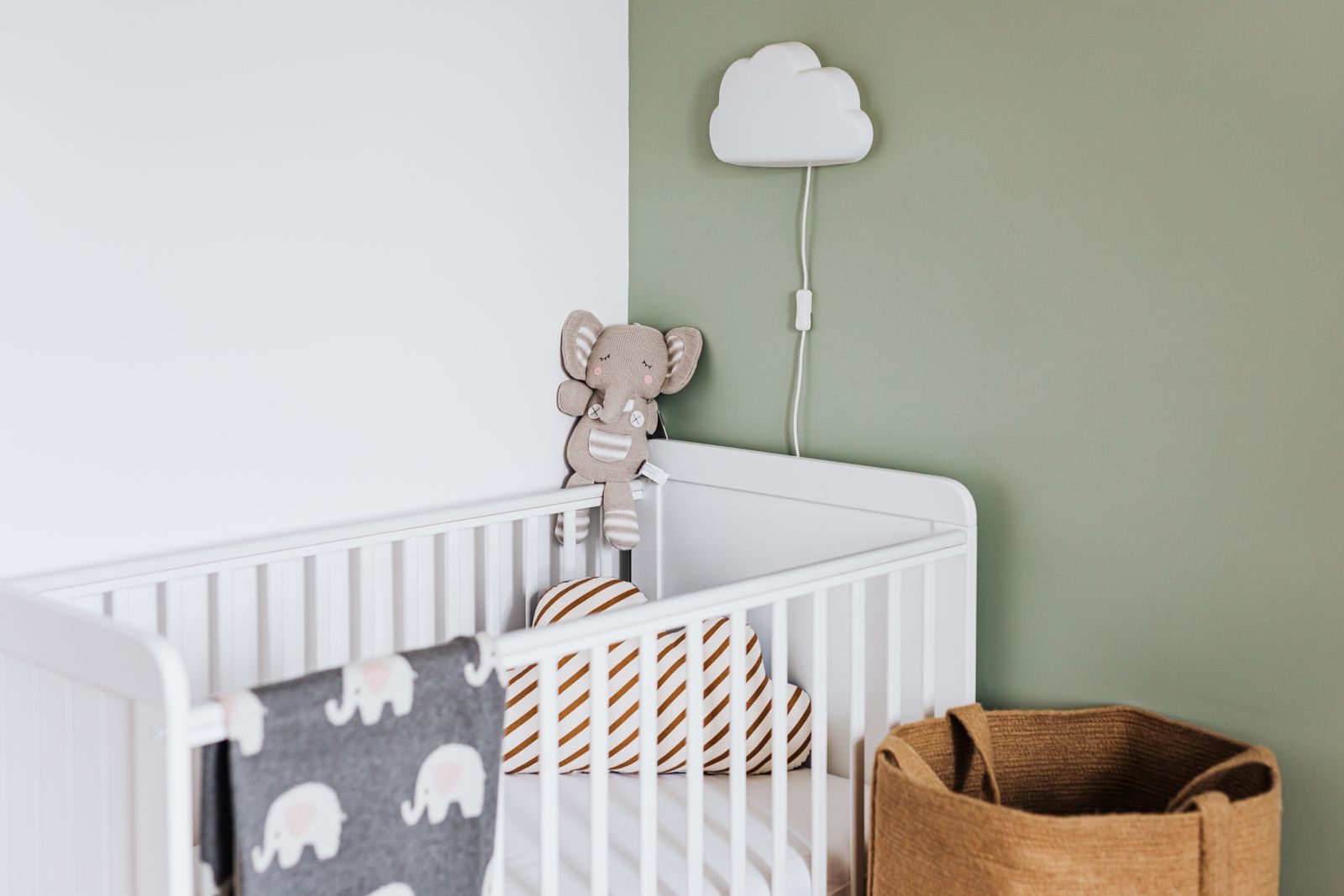
Volume deserves real attention here. A study published in Pediatrics in March 2014 tested 14 infant sleep machines and found all of them could exceed 50 decibels — the ambient noise limit recommended for hospital nurseries — at typical crib distances, and several exceeded 85 decibels at maximum volume up close. The study’s practical takeaways: keep any sound machine well away from the crib (around seven feet), keep the volume low, and don’t run it louder or longer than needed. Follow the manufacturer’s placement guidance and your pediatrician’s advice over any internet default.
Honest drawbacks: the good stuff increasingly lives behind Hatch+, the device needs Wi-Fi and an account to unlock its best tricks, and a $70–$100 nursery gadget can be outgrown. Dealbreaker: if you’d resent a subscription prompt on a sound machine, buy the Magicteam and a $12 night light instead.
If budget decides: Magicteam
At $27.99, the Magicteam is the machine that makes this whole category honest. Twenty sounds marketed as non-looping, 32 volume steps that go from whisper to genuinely loud, a memory function, and power over USB or the included adapter. Forbes Vetted names it best budget, and for a guest room, a dorm, an office, or a first try at sleeping with noise, it’s the obvious low-risk answer.
Honest drawbacks: the sound palette is thinner than the LectroFan’s — fewer distinct textures, more overlap between options — the plastics feel like the price, and the warranty situation is retailer returns rather than a published manufacturer promise. Dealbreaker: none at this price, which is exactly the point.
If you want the machine to run your mornings too: Hatch Restore 3
The Restore 3 is the adult flagship — a bedside sound machine fused with a sunrise lamp and alarm clock, at $169.99. As a pure noise source it doesn’t beat a $66 LectroFan; what you’re buying is the routine: wind-down light scenes at night, a gradual sunrise instead of a phone alarm, and a bedside surface that argues against doomscrolling. It’s also FSA/HSA eligible, which takes some sting out of the price.
Honest drawbacks: this is the machine where the subscription math bites hardest — $319.96 over three years with Hatch+ — and where you should be honest about whether you’ll use the extras past January. We took a longer look at this device class in our sunrise alarm clock coverage; the short version is that the light features, not the sounds, are what justify the price tier.
How we compared
We compared current, in-stock models on manufacturer specifications and pricing (verified against maker and major-retailer listings in July 2026), published findings — including the 2014 Pediatrics study on infant sleep machine volume — and consistent patterns in long-term owner feedback rather than launch reviews. We don’t claim hands-on lab testing, and where a spec isn’t published (like wattage on USB machines) we say so instead of estimating. Our editorial standards cover how we source and verify. This guide lives in our Home & Living section alongside the rest of the bedroom stack.
Frequently asked questions
What’s the difference between white, pink, and brown noise?
They’re different balances of the same idea. White noise spreads energy evenly across frequencies and sounds like static; pink noise tilts toward lower frequencies and sounds like steady rain; brown noise tilts further still and sounds like a distant waterfall. Machines like the LectroFan and Magicteam let you slide between them — most people land somewhere in the pink-to-brown range.
Do I need the Hatch subscription for the machine to work?
No. Hatch devices keep their core sounds, lights, and alarms without Hatch+. The subscription ($4.99 a month or $49.99 a year) unlocks the larger sound and story library and extra routines. Decide based on whether those extras are the reason you’re buying.
How loud should a sound machine be in a baby’s room?
Quieter and farther away than most defaults. The 2014 Pediatrics study of infant sleep machines led its authors to recommend placing the machine well away from the crib — around seven feet — keeping volume low, and limiting run time. Your pediatrician’s guidance beats any preset, and the machine should never sit in or on the crib.
Is a real-fan machine better than a digital one?
Better is the wrong axis — they’re different. A Dohm’s moving-air sound is naturally seamless and many people find it warmer, but it offers one sound at moderate maximum volume. Digital machines offer variety and more output; the good ones (LectroFan especially) generate rather than loop their sounds, which closes the “fake sounding” gap.
Will a white noise machine mask a snoring partner?
It can take the edge off light or intermittent snoring by raising the room’s noise floor, and deeper noise colors (brown) work better than white for low-frequency rumble. It won’t erase loud snoring — and if the snoring involves gasps or pauses, that’s a conversation for a doctor, not a gadget.
Bottom line
Buy the LectroFan EVO if you want the best noise, full stop. Buy the Dohm Classic if only real air will do, the Magicteam if you’re spending as little as possible, the Hatch Rest for a nursery you’ll manage from a phone, and the Restore 3 only if the sunrise-alarm half of it excites you as much as the sounds. Quiet is a system, though, not one purchase: our light control comparison handles the other sense, our weighted blanket guide covers the pressure side of settling down, and our bed sheet comparison decides what all this peace happens on top of.