Some links on our site may earn us a commission at no extra cost to you. Learn more.
General information, not dietary advice — and if you have a nut, soy, or gluten concern, allergen labels and your doctor outrank any comparison article.
The oat milk vs almond milk vs soy milk question has a clean answer once you decide what the carton is for. If it’s nutrition, soy milk wins and it isn’t close — it’s the only one of the three with protein in dairy-milk territory. If it’s coffee, oat milk’s body and frothability made it the café default. If it’s cutting calories, unsweetened almond milk is the lightest pour in the case. Most fridges honestly have room for the one that matches the job.
The nutrition, side by side
Medical News Today’s plant-milk analysis reports per-100-gram figures for unflavored versions: soy milk at 38 calories and 3.55 g protein, oat milk at 48 calories and 0.8 g protein, and almond milk at 19 calories and 0.66 g protein, with whole cow’s milk at 61 calories and 3.27 g protein for reference. Scaled to an 8-ounce cup (about 240 g), that’s roughly 91 calories and 8.5 g protein for soy, 115 calories and 1.9 g for oat, and 46 calories and 1.6 g for almond.
Protein per 100 calories: the number the cartons don’t print
Calories and protein only make sense together, so we computed protein density — grams of protein per 100 calories — from the Medical News Today figures above. This is our arithmetic, and it redraws the rankings.
| Calories per cup (~240 g) | Protein per cup | Protein per 100 kcal (our math) | Where it shines | |
|---|---|---|---|---|
| Soy milk | ~91 | ~8.5 g | ~9.3 g | Nutrition — the dairy stand-in |
| Cow’s milk (whole, reference) | ~146 | ~7.8 g | ~5.4 g | The benchmark |
| Almond milk (unsweetened) | ~46 | ~1.6 g | ~3.5 g | Lowest-calorie pour |
| Oat milk | ~115 | ~1.9 g | ~1.7 g | Coffee texture and foam |
Two surprises live in that table. Soy milk is actually more protein-dense than whole dairy milk — nearly twice as much protein per calorie. And oat milk, the current favorite, is the least protein-dense option here, carrying the most calories of the three plant milks while delivering barely more protein than almond. Oat milk earns its place on texture, not nutrition.
What the numbers can’t tell you
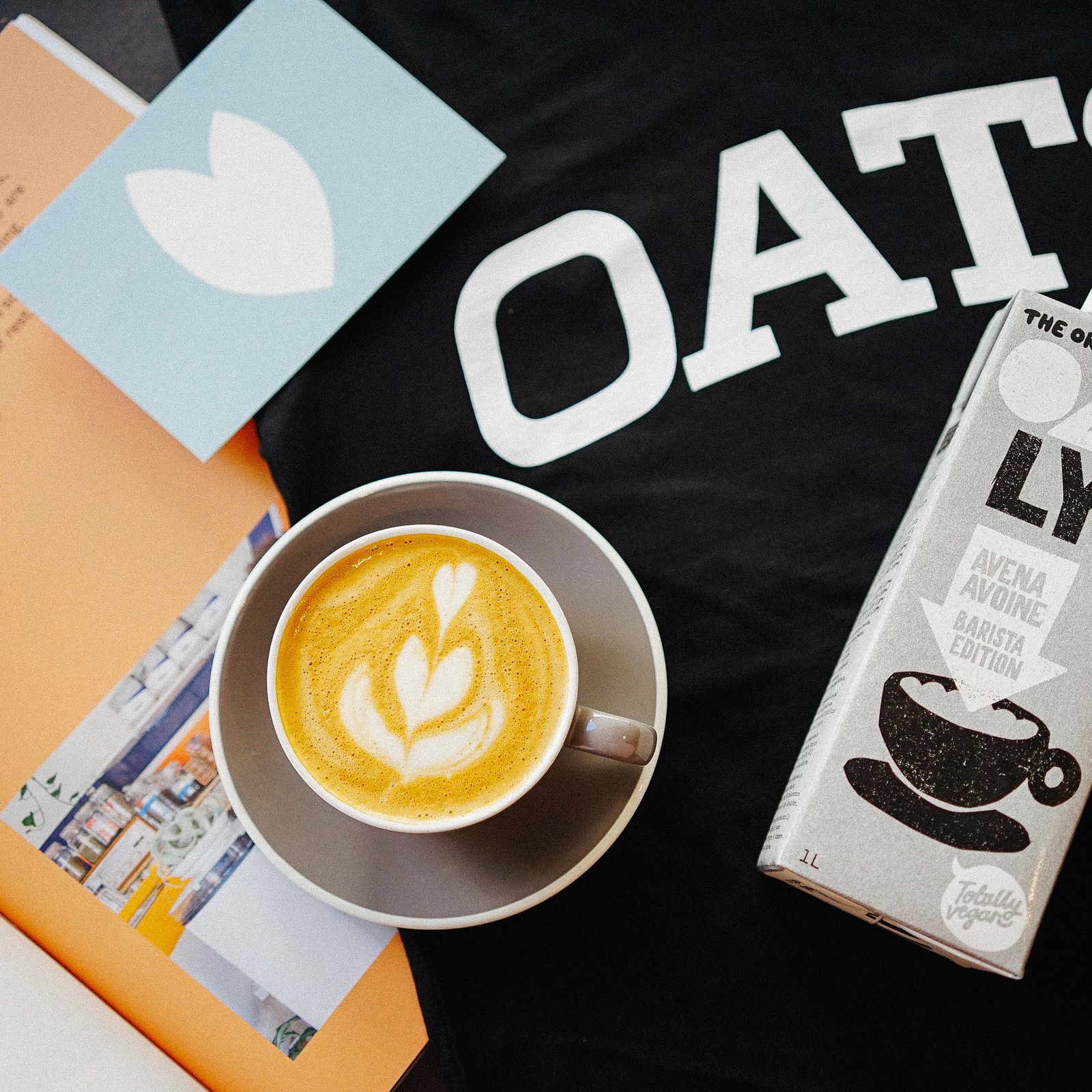
In coffee, the ranking flips. Oat milk’s higher carbohydrate content gives it body and a stable microfoam, which is why barista blends are almost always oat. Almond milk tends to thin out and can split in hot, acidic coffee; soy froths respectably but its flavor divides people more in espresso than in cereal.
On fortification, check the label rather than the category: calcium, vitamin D, and B12 levels are set by the manufacturer, not the plant. Unsweetened versions of all three exist, and the sweetened defaults can add sugar quickly — the ingredient list is the honest label.
On allergies and diet rules, each has a disqualifier: almond is out for nut allergies, soy is a top-nine allergen, and oat milk needs a certified gluten-free label if celiac disease is in the picture. That’s often what actually decides the carton.
How we compared
Nutrition figures come from Medical News Today’s published per-100-gram comparison of unflavored milks; the per-cup scaling and protein-density math are our own, and real cartons vary by brand and fortification. We don’t taste-test and we don’t rank “healthiness” — our editorial standards explain how we handle nutrition-adjacent topics.
Quick answers
Which plant milk has the most protein?
Soy milk, at roughly 8.5 g per cup based on Medical News Today’s figures — about four times what oat or almond milk delivers, and slightly more protein per calorie than whole dairy milk.
Is oat milk healthier than almond milk?
Neither is a clear health winner: oat carries more calories and carbs with similar protein, while unsweetened almond is the lightest but nearly protein-free. Pick by what you need — fewer calories points to almond, coffee texture points to oat, actual nutrition points to soy.
Why does oat milk foam better in coffee?
Its higher carbohydrate load gives the foam structure and body that almond milk’s thin base can’t hold, which is why barista editions and café menus standardized on oat.
Do I need a barista version?
Only for hot coffee drinks. Barista blends add fat and stabilizers so the milk steams without splitting; for cereal, smoothies, or baking, the regular carton does the same job for less.
Sorting the rest of the pantry with the same math? See our greens powders vs. multivitamins vs. real vegetables face-off, the electrolyte powders vs. sports drinks comparison, and our protein powder types breakdown. More in Nutrition Basics.