Some links on our site may earn us a commission at no extra cost to you. Learn more.
Under $300, the tent market splits into three distinct personalities, and picking among them matters far more than picking among brands. Dome tents are the classic crossed-pole design: aerodynamic, storm-shedding, and light enough to carry away from the car. Cabin tents trade that wind profile for near-vertical walls and standing headroom, turning a campsite into something closer to a canvas room. Instant-pitch tents — with pre-attached telescoping poles that unfold in a minute or two — sell the one thing every arriving camper wants at 8 p.m. on a Friday: speed.
The frustrating part is that each style is genuinely the best choice for somebody. The family that camps three calm summer weekends a year has no reason to suffer a crouched-over dome. The couple that camps in shoulder-season wind has every reason to avoid a tall, flat-walled cabin. And anyone who has wrestled color-coded poles in the dark understands exactly why instant tents exist. Under $300 you can get a very good version of any of these — but not a tent that does all three jobs at once.
Quick answer: buy a dome if weather resistance and versatility matter most, a cabin if livable space for a family is the priority, and an instant tent if setup speed is the thing that actually gets you camping more often.
Our verdict at a glance
- Best overall: A quality dome tent — the most weather-capable, versatile, and durable design in the under-$300 class
- Best budget: A basic dome — entry-level domes deliver more storm protection per dollar than any other style
- Best upgrade: A full-height cabin tent with a robust rainfly — the most comfortable way for a family to camp under $300
- Best for impatient setup crews: An instant-pitch cabin — from bag to standing in a couple of minutes, with honest trade-offs in weight and weather
How the three tent styles compare
| Attribute | Dome | Cabin | Instant pitch |
|---|---|---|---|
| Price tier (under $300 class) | $–$$ | $$–$$$ | $$–$$$ |
| Setup time | Moderate — 10–20 minutes | Slowest — 15–30 minutes | Fastest — often under 5 minutes |
| Wind and storm resistance | Best — low, rounded profile sheds gusts | Weakest — tall flat walls catch wind | Fair — cabin-shaped versions share cabin weaknesses |
| Headroom and livability | Limited — crouching near the walls | Best — standing height, vertical walls | Good — most are cabin-styled inside |
| Packed weight and bulk | Lightest and most compact | Heavy and bulky | Heaviest — poles stay attached |
| Long-term durability | Very good — simple, replaceable poles | Good — more seams and zippers to wear | Mixed — hub and hinge mechanisms are the weak point |
Dome tents: the storm-tested default
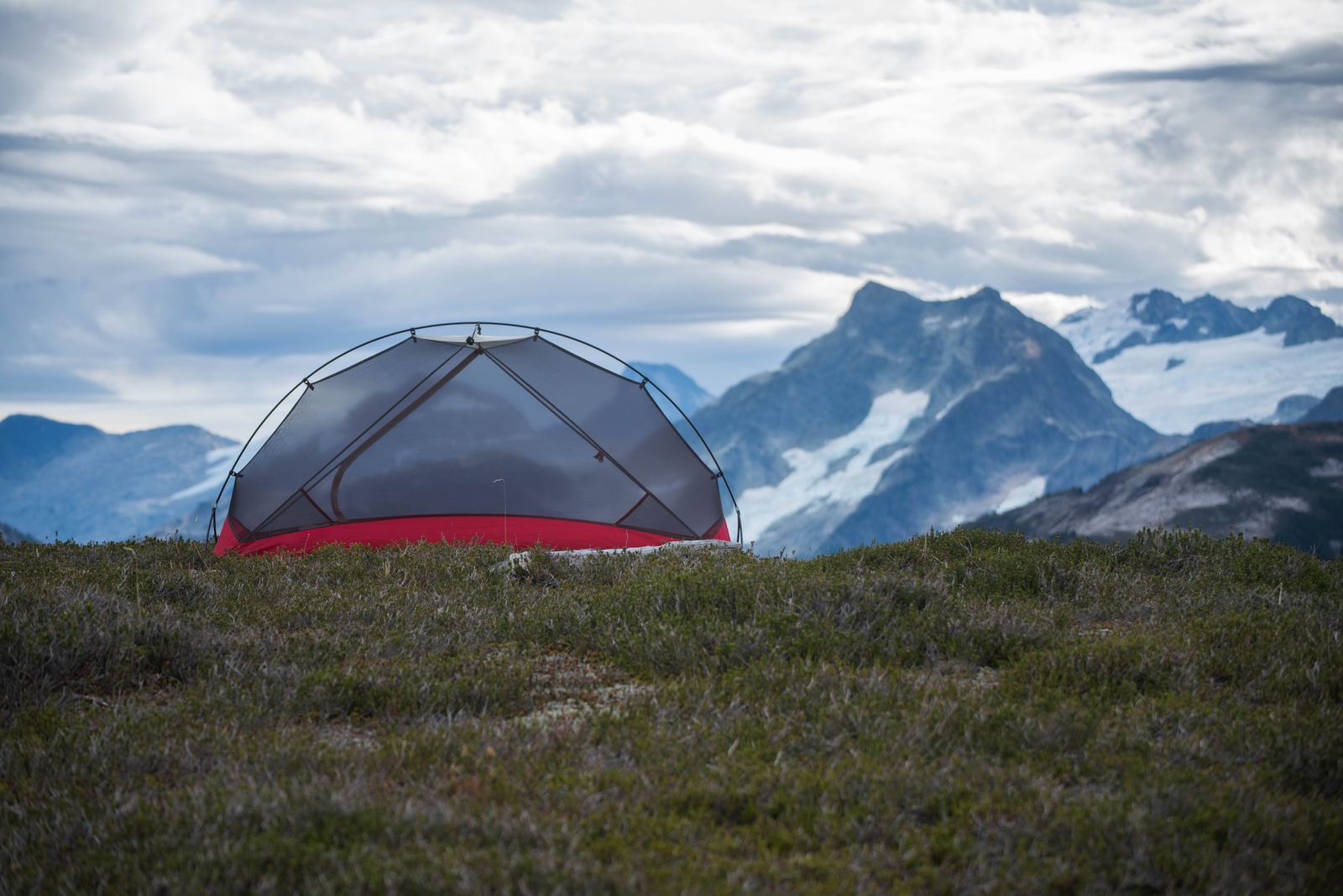
Where it wins. The dome’s crossed-pole geometry is popular for the same reason it has barely changed in decades: it works. The curved profile lets wind slide around the tent instead of slamming into a wall, flexible poles bend and recover in gusts that would snap rigid frames, and rain runs off the rounded fly with nowhere to pool. Domes are also the lightest and most packable style here — the only one of the three you could plausibly carry a short distance from the car — and their simple pole structure means a snapped section is a cheap field fix rather than a dead tent. In the under-$300 class, dome money goes further: mid-tier dome pricing buys full-coverage rainflies, aluminum poles, and quality zippers that cabin-tent pricing spends on sheer square footage.
Honest drawbacks. The same curved walls that shed wind steal living space. Rated capacity is optimistic in every tent style, but domes feel it most — a “four-person” dome is a snug fit for two adults and their gear, and only the center offers full headroom. Changing clothes involves a certain amount of yoga. Setup is honest work: threading or clipping poles takes ten to twenty minutes and is far easier with two people.
Who should buy it. Couples, solo campers, anyone who camps in spring and fall as well as high summer, and anyone whose sites might be exposed to real wind. If you only buy one tent, buy this style — it is the best overall pick because it fails least often in the situations that matter.
Who should skip it. Families of four or more who camp exclusively in fair weather. For them, the dome’s storm pedigree solves a problem they rarely have, at the cost of comfort they’d feel every trip.
Cabin tents: rooms with a view
Where it wins. Nothing under $300 changes the feel of a campsite like a cabin tent. Near-vertical walls mean the floor space on the label is space you can actually use, adults can stand upright to dress, and features like room dividers, giant doors, and screened porches turn a weekend into something civilized. For families, the livability difference is not subtle — kids get a play space on rainy afternoons, air mattresses fit without wall-crowding, and the huge windows keep everything ventilated on hot nights. Owners consistently describe the upgrade from dome to cabin as the moment family camping stopped feeling like an endurance event.
Honest drawbacks. Those tall flat walls are sails. In gusty conditions a cabin tent flexes, rattles, and — inadequately staked — can fail outright; this is the style’s defining weakness and no sub-$300 model escapes it. Many budget cabins also ship with partial-coverage rainflies that leave big windows exposed to driving rain, so the most common complaint is weather intrusion in storms the tent’s size implicitly promises to handle. They are heavy, bulky in the trunk, slow to pitch, and their many zippers and seams give time more to work on.
Who should buy it. Fair-weather family campers at sheltered, drive-up campgrounds — which is honestly a large share of all campers. As an upgrade pick for comfort, nothing else here comes close. Pair it with a proper cooler from our YETI vs RTIC vs Coleman comparison and a campsite starts feeling like a cottage.
Who should skip it. Anyone camping exposed sites, shoulder seasons, or forecast-be-damned weekends. When the wind arrives, you will trade every square foot of standing room for a lower profile.
Instant-pitch tents: speed as a feature
Where it wins. Instant tents attach the poles permanently to the canopy with telescoping or folding hubs, so setup becomes: unfold, extend, click. What takes twenty minutes with a conventional tent takes two or three, and takedown is nearly as fast. That speed is worth more than it sounds — it means arriving after dark is fine, short one-night trips stop feeling like too much effort, and a single adult can pitch camp while wrangling children. Most instant tents use a cabin-style shape, so you get respectable headroom in the bargain. For campers whose real obstacle is activation energy, an instant tent genuinely produces more camping.
Honest drawbacks. The convenience is bought with mechanical complexity. Those hubs, hinges, and telescoping joints are the failure points, and unlike a standard dome pole, a broken hub is rarely field-repairable and often means replacing the tent. Packed size is the bulkiest of the three styles because the poles never fully separate, and the weight is substantial. Weather protection is typically the thinnest here too: many instant models wear short cap-style rainflies, and their cabin geometry inherits cabin wind behavior. The most common owner complaint after a few seasons is a sticky or cracked pole joint, not torn fabric.
Who should buy it. Frequent short-trip campers, festival-goers, parents pitching solo, and anyone who has ever abandoned a camping weekend because setup felt like a chore. Buy the version with the most substantial rainfly you can find in budget.
Who should skip it. Buyers who expect a decade of service, campers in wet or windy regions, and anyone tight on trunk space — a conventional dome packs smaller, weighs less, and will likely outlive it.
How we compared
We compared the three design categories rather than individual models, because under $300 the architecture determines the experience far more than the badge does. Our attributes are the ones that decide real trips: setup time and whether one person can manage it, wind and rain behavior, usable interior space versus rated capacity, packed bulk, and the long-term failure patterns owners consistently report for each style. We use price tiers within the under-$300 class rather than exact prices, which move constantly with seasons and sales, and where a weakness is inherent to a design — cabin walls in wind, instant-tent hubs — we attribute it to the design rather than to any single product. Browse the rest of our outdoor comparisons in the Outdoors & Travel category.
Frequently asked questions
Is a tent’s person rating accurate?
Treat it as a maximum-occupancy figure for sleeping shoulder to shoulder with no gear. The comfortable rule across all three styles is to subtract two: a six-person tent suits four people, a four-person tent suits two. Cabin tents come closest to honest ratings because their vertical walls don’t shrink the usable floor.
Can a cheap tent handle rain?
Often yes — if you help it. Look for a full-coverage rainfly, seam-sealed construction, and a bathtub-style floor, then add a ground sheet and re-treat the seams before the first trip. The style matters too: a modest dome with a full fly will outperform a much larger cabin with a partial fly in the same storm.
Are instant tents less durable than regular tents?
The fabric is comparable; the mechanism is the difference. Pre-attached hub-and-hinge frames add failure points that conventional shock-corded poles don’t have, and they’re harder to repair or replace. Careful owners get years of service, but a conventional dome remains the safer bet for longevity.
What matters most for camping in wind?
Profile and anchoring. A low, rounded dome pitched with every stake and guyline in use will ride out gusts that flatten taller tents. Whatever style you own, stake it fully every time, orient the smallest face into the wind, and use the guylines — most wind failures owners report trace back to skipped stakes, not bad tents.
Should I spend the full $300 or start cheaper?
If you’re new to camping, a budget dome is the smart first tent: the style is forgiving and the money at risk is small. Upgrade toward the top of the class once you know your pattern — families drift toward cabins, frequent short-trippers toward instant pitch, and all-season campers toward better domes. Camp first, specialize second.
Bottom line
Under $300, you’re not choosing a brand — you’re choosing which compromise you can live with. The dome asks you to crouch and rewards you with weatherproofing and longevity; it’s our overall pick because bad weather is the one variable you can’t schedule around. The cabin asks you to watch the forecast and rewards you with genuine comfort, making it the right upgrade for fair-weather families. The instant tent asks you to accept mechanical risk and rewards you with trips that actually happen. Decide which promise matters most, and the rest of the kit — cooler, shade, even the bag you pack for the trip — falls into place around it. And if your camping leans beach-ward, our shade comparison is the natural next read.