Some links on our site may earn us a commission at no extra cost to you. Learn more.
Every playroom eventually runs out of floor. Between the magnetic tiles gleaming in every preschool classroom, the LEGO sets multiplying on wish lists, and the wooden blocks grandparents swear by, the average family ends up buying all three — and then quietly notices that only one of them gets played with every single day. Building toys are one of the biggest cumulative spends of early childhood, and unlike most toys, the good ones survive a decade and multiple kids.
The dilemma isn’t which builder is “best” in the abstract — it’s which one matches your child’s age, your tolerance for tiny pieces underfoot, and your budget over the long haul. Magnetic tiles reward toddlers instantly but plateau for some older builders. LEGO scales practically forever but frustrates small hands and devours parental toes. Wooden blocks are the cheapest and most open-ended, yet they’re often abandoned first.
The quick answer: for ages roughly 1 to 3, start with wooden blocks; for ages 3 to 6, magnetic tiles earn the most daily play per dollar; from about 5 up, LEGO takes over and never really stops — and if you can only buy one system for a mixed-age household, magnetic tiles are the pick that everyone actually shares.
Our verdict at a glance
- Best overall: Magnetic tiles — the widest age range of genuine daily engagement and the easiest cleanup
- Best budget: Wooden blocks — a basic hardwood set costs the least, lasts generations, and never goes out of style
- Best upgrade: LEGO — the deepest system; skills and collections compound for years once a child is ready
- Best for toddlers: Wooden blocks, with large-format duplo-style bricks as the bridge to LEGO later
- Best for siblings sharing: Magnetic tiles — a 3-year-old and an 8-year-old will build together with the same bin
How the three builders compare
| Attribute | Magnetic tiles | LEGO | Wooden blocks |
|---|---|---|---|
| Sweet-spot ages | ~3–8 | ~5 and up (large-brick lines earlier) | ~1–5 |
| Learning curve | Instant success | Steep at first, deeply rewarding | Instant, self-directed |
| Cleanup & storage | Easy — big flat pieces stack in one bin | Hardest — thousands of tiny parts | Moderate — bulky but few pieces |
| Durability & lifespan | Good; magnets and seams are the weak point | Exceptional; decades of reuse | Exceptional; nearly indestructible |
| Cost over time | $$ — one or two expansions usually suffice | $$$ — sets accumulate for years | $ — one good set is often enough |
| Open-ended vs instructed play | Almost entirely open-ended | Both — sets and freeform | Entirely open-ended |
Magnetic tiles: instant gratification that lasts longer than you’d expect
Where they win. Magnetic tiles are the rare toy that works the very first time a 3-year-old touches them. The magnets do the fussy alignment work, so young builders get towers, garages, and rocket ships on day one instead of frustration. That early success is why owners consistently report tiles becoming the default daily toy for years. They also win the cleanup war decisively: large, flat pieces snap into stacks and drop into a single bin in minutes. Translucent tiles on a window or light table add a play dimension neither rival offers, and because every brand’s square is roughly the same idea, a modest starter set plus one expansion covers most families.
Honest drawbacks. Structures are inherently simple — walls and boxes, mostly — so some kids hit a creative ceiling around age 7 or 8 that LEGO never imposes. Quality varies widely between brands; the most common complaint is weaker magnets and flexy seams in bargain sets, and any tile with a cracked seam should be discarded immediately, since sealed-in magnets are the entire safety design of the category. Check the manufacturer’s age grading before buying for households with children under 3, and inspect tiles periodically as they age.
Who should buy them. Families with kids in the 3-to-8 window, multi-age households that need one shared system, and anyone who values fast cleanup as much as play value.
Who should skip them. Parents of a detail-obsessed 9-year-old who’s already deep into instruction-based building — that child wants LEGO, and tiles will gather dust.
LEGO: the deepest system in toys, at a price
Where it wins. Nothing else in the toy aisle scales like LEGO. The same interlocking system serves a 5-year-old’s first small set and a teenager’s thousand-piece build, and pieces bought a decade apart click together perfectly. Following instructions builds sequencing and patience; freeform building builds spatial reasoning and creativity; and the themed sets keep motivation high in a way plain blocks can’t. Durability is legendary — bins of bricks routinely pass from one sibling to the next, and to the next generation after that, which quietly makes the per-year cost far more reasonable than the sticker shock suggests.
Honest drawbacks. It’s the most expensive path in this comparison, and the collection pressure is real — sets are designed to multiply. Small parts make standard lines unsuitable for children under the marked age grading and risky in homes with mouthing-age siblings; the large-brick preschool lines exist precisely to bridge that gap. Cleanup is the worst of the three by a wide margin, and the most common parental complaint isn’t about the toy at all — it’s about what stepping on a brick at midnight feels like. Some children also get stuck in instructions-only mode and need a nudge toward freeform building to unlock the system’s best value.
Who should buy it. Families with kids 5 and up who show any interest in making things, and parents playing the long game — a LEGO collection is a ten-year investment that keeps paying.
Who should skip it. Households where all children are under 4 (start with blocks or tiles and the large-brick lines), and anyone who needs toys picked up in five minutes flat.
Wooden blocks: the humble classic that still earns its shelf
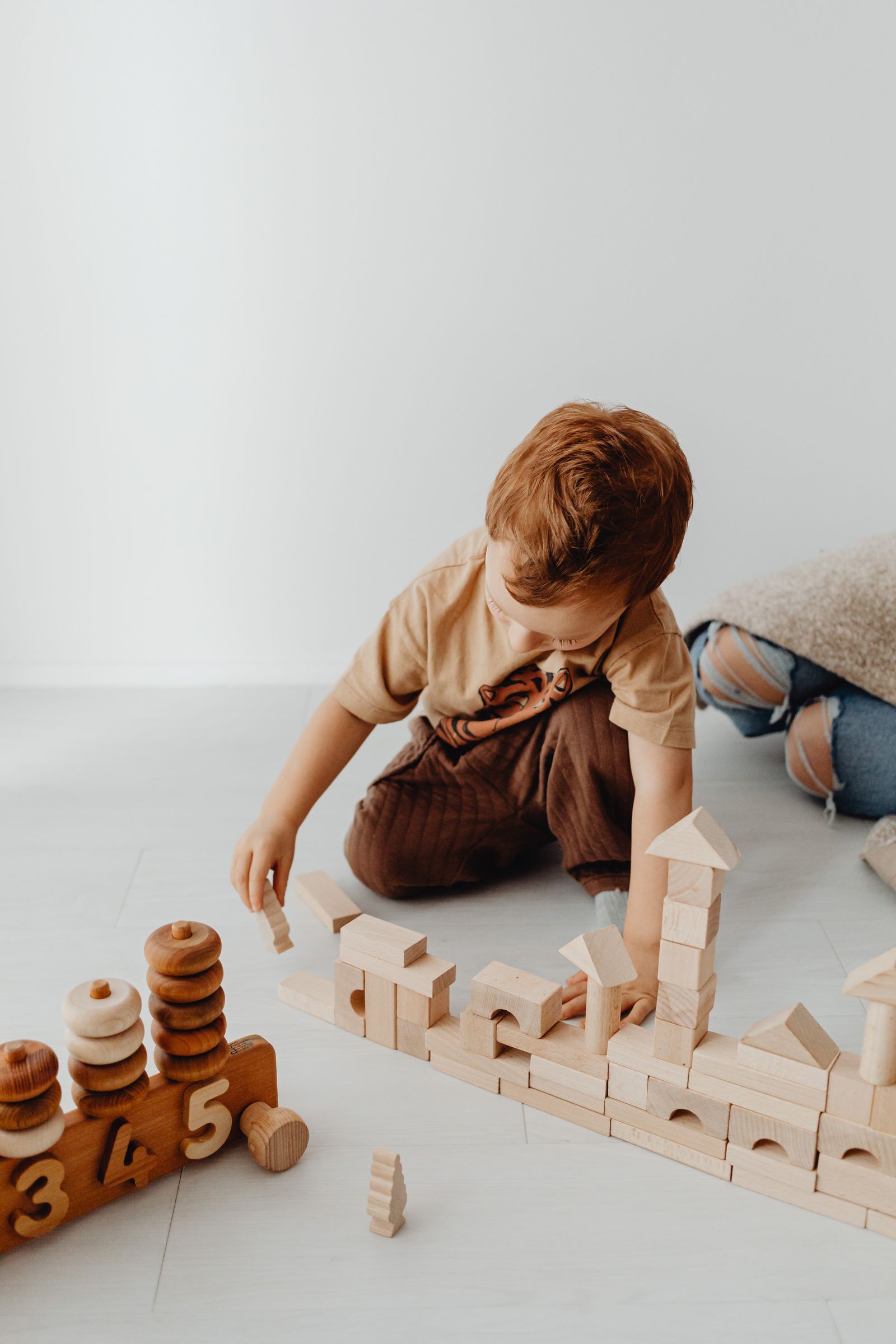
Where they win. Wooden blocks are the cheapest entry in this comparison and the most truly open-ended: no magnets guiding the design, no instructions dictating it, just gravity and imagination. That’s not a romantic flourish — stacking un-joined blocks teaches balance, cause and effect, and fine motor control in a way connected systems literally cannot, because the tower actually falls. They’re also the best first builder for ages 1 to 3, when magnetic tiles are ungraded for the child and LEGO is out of the question. A quality hardwood set is functionally immortal; it will outlast every plastic toy in the house.
Honest drawbacks. Engagement tends to fade earliest — many kids drift away around 4 or 5 once connected systems arrive, and the most common owner comment is that the beautiful block set became a doorstop after the magnetic tiles showed up. Structures are limited by physics, storage is bulky relative to play value, and dropped hardwood blocks are loud on hard floors and heavy on toes. Painted budget sets can also chip; unfinished or water-based-finish hardwood is the more durable choice.
Who should buy them. Every family with a child under 3 — this is the correct first builder — plus fans of quiet, screen-free, open-ended play at the lowest price tier.
Who should skip them. Parents of kids already 5+ who have never shown interest in blocks; at that age, tiles or LEGO will get dramatically more use.
Storage, sanity, and the long game
One factor that rarely makes the marketing copy but decides real-world satisfaction: what happens at 7 p.m. when the building stops. Magnetic tiles reward a single shallow bin — stacks of tiles drop in flat and the whole job takes a preschooler two minutes. Wooden blocks want a low open crate or basket; anything with a lid tends to end the habit of putting them away. LEGO demands an actual system once the collection passes its second or third set — most families settle on a divided drawer or an under-bed tray sorted loosely by color or piece type, and the households that skip this step are the ones where the bricks quietly stop coming out.
Think about the exit, too. All three systems hold value unusually well for toys. Hardwood blocks and LEGO pass down to younger siblings, cousins, and the neighborhood with essentially nothing lost, and used LEGO in particular is easy to rehome. Magnetic tiles hand down well provided every tile still has intact seams — inspect before passing them on, and cull any piece that’s cracked. That resale and hand-me-down value is worth factoring into the price tiers above: the effective cost of a well-kept set over ten years is far below what the receipt says.
How we compared
We compared the three systems on the factors that actually determine whether a building toy earns its floor space: the age range of genuine daily engagement, learning curve, open-endedness, durability and hand-me-down value, cleanup burden, and total cost over a childhood rather than at checkout. We weighted long-term ownership patterns — what families say after a year, not after a birthday party — and we treated age grading as a hard constraint, not a suggestion: always follow the manufacturer’s marked age range, especially in homes with children under 3. Prices are expressed in tiers ($ to $$$) because street prices move constantly. This piece is part of our Family & Kids comparison series, and no manufacturer had any input on our conclusions.
Frequently asked questions
What age should a child start with each system?
Wooden blocks from around the first birthday, magnetic tiles from the manufacturer’s marked age (commonly 3), and standard LEGO from about 5, with the large-brick preschool lines covering roughly 18 months to 5 years. Individual kids vary — follow the age grading on the specific product, not the category.
Are off-brand magnetic tiles as good as the name brands?
Sometimes, but it’s the one category here where cheap can mean meaningfully worse: weaker magnets frustrate builders, and flimsier seams matter because the seams are what keep magnets sealed inside. Mid-tier and up is where we’d shop, and any cracked tile goes in the trash, whatever the brand.
Do different brands of magnetic tiles work together?
Generally yes for standard squares and triangles, since most brands converged on similar dimensions — but specialty pieces often don’t cross over, and magnet strength differences can make mixed builds saggy. Buying expansions from your original brand is the safer path.
Is LEGO worth it if my kid only follows the instructions?
Yes — instruction-following builds real skills — but the system’s best value unlocks when kids build freeform. A bin of loose bricks alongside the sets, and a parent who occasionally builds something ridiculous with them, is usually all the nudge required.
Which one is best for family play together?
Magnetic tiles, because every age can contribute to the same build at the same time. If you’re after structured together-time instead, that’s a different category entirely — our family board games by age guide covers it stage by stage.
Bottom line
Buy in sequence, not in competition. Wooden blocks first, because nothing else serves the under-3 years as well or as cheaply. Magnetic tiles at 3, because they’ll dominate daily play through early elementary and let siblings build together. LEGO around 5, because it’s the system that grows with a child longer than any toy ever made. If the budget only stretches to one right now, match it to your oldest child’s stage — and if kids span 3 to 8, magnetic tiles are the one bin everyone will reach for. For the next big family purchase after the playroom, our convertible car seat comparison has you covered.